Introduction
The Activated Sludge Process (ASP) STP is a proven biological wastewater treatment technology widely used for treating domestic sewage and biodegradable wastewater. It is designed to reduce organic pollutants and suspended solids through the natural activity of microorganisms under controlled aerobic conditions.
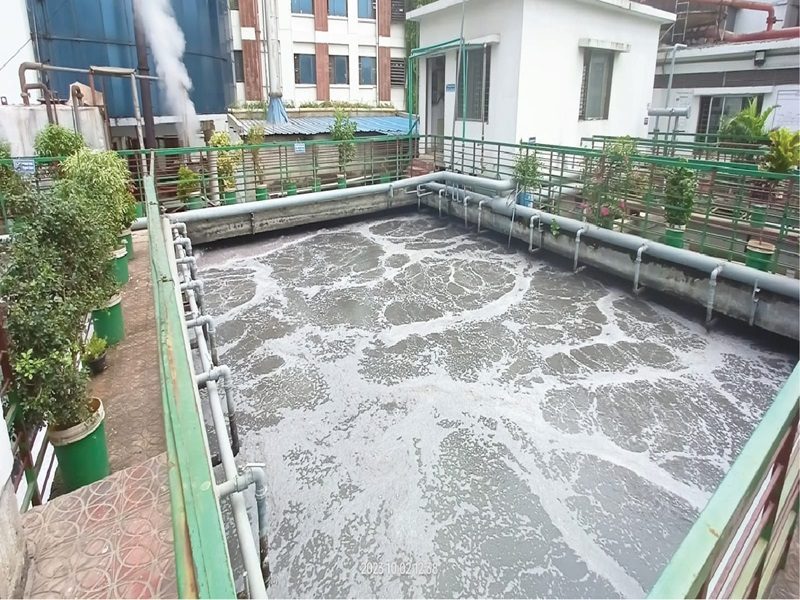
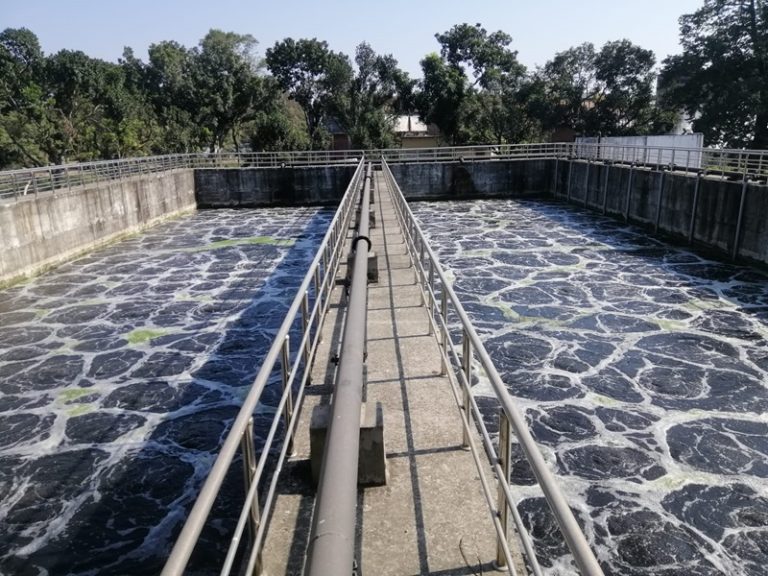
In an ASP-based Sewage Treatment Plant (STP), microorganisms are maintained in suspension within an aeration tank. Oxygen is supplied to the biological reactor through an efficient aeration system, allowing microorganisms to consume biodegradable organic matter present in sewage. After biological treatment, the mixed liquor is transferred to a secondary clarifier, where biological solids settle by gravity. A portion of the settled sludge is returned to the aeration tank as Return Activated Sludge (RAS), while excess sludge is removed as Waste Activated Sludge (WAS) for further treatment and disposal.
With proper design and operation, an Activated Sludge Process STP can provide reliable treatment performance and produce treated effluent suitable for reuse applications or environmentally compliant discharge, depending on the applicable standards and project requirements.
What Is an Activated Sludge Process STP?
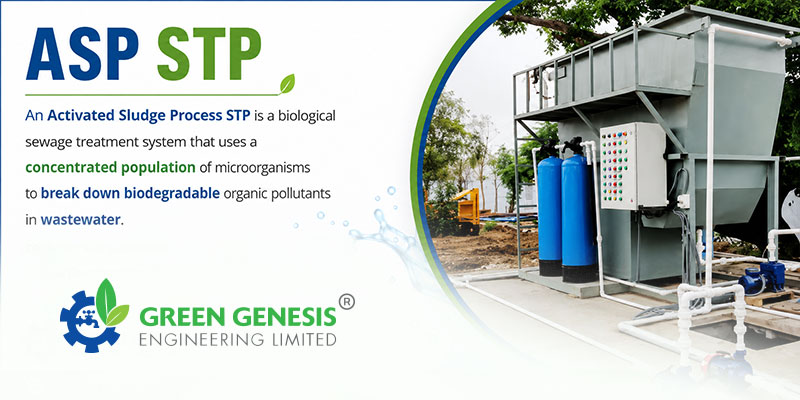
An Activated Sludge Process STP is a biological sewage treatment system that uses a concentrated population of microorganisms to break down biodegradable organic pollutants in wastewater. The word "activated" refers to the biologically active sludge containing microorganisms that actively consume and metabolize organic pollutants. The basic treatment principle involves three essential elements:
Sewage + Microorganisms + Oxygen = Biological Wastewater Treatment
The microorganisms require suitable environmental conditions to remain active and healthy. Oxygen is supplied to the aeration tank, while wastewater provides biodegradable organic matter that serves as a food source. Following biological treatment, the microorganisms and other suspended solids are separated from the treated water through sedimentation in a secondary clarifier. This continuous biological cycle makes ASP STP technology a reliable solution for a wide range of sewage treatment applications.
How Does an Activated Sludge Process STP Work?
A typical ASP STP operates through a series of treatment stages designed to progressively remove physical, biological, and other pollutants from sewage. A simplified process flow can be represented as:
Inlet Sewage → Screening → Grit Removal → Equalization → Aeration Tank → Secondary Clarifier → Disinfection → Treated Water
The sludge circulation process operates simultaneously:
Secondary Clarifier → Return Activated Sludge (RAS) → Aeration Tank
while excess sludge follows:
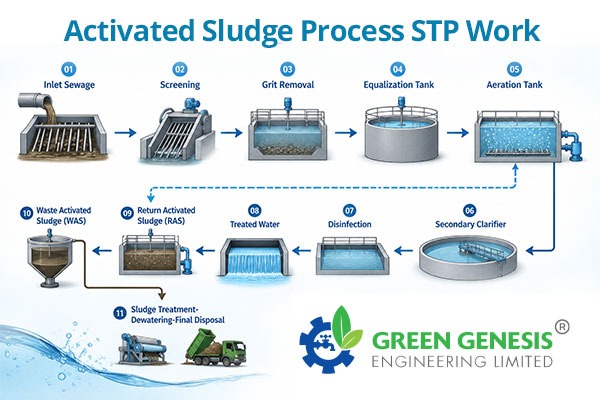
Waste Activated Sludge (WAS) → Sludge Treatment → Dewatering → Final Disposal
Each stage performs a specific function, and the overall efficiency of the plant depends on the proper integration of all treatment units.
1. Inlet Sewage Collection
Raw sewage generated from residential buildings, commercial facilities, institutions, hotels, hospitals, or other establishments is collected through a suitable sewerage network. The incoming wastewater may contain:
- Organic matter
- Suspended solids
- Food particles
- Fats and oils
- Plastics
- Grit
- Detergents
- Pathogens
- Nitrogen and phosphorus compounds
The characteristics of the incoming sewage vary according to the source and must be considered during STP design.
2. Screening
The first treatment stage generally involves mechanical or manual screening. Screens remove larger floating and suspended materials that could damage pumps or interfere with downstream processes. Commonly removed materials include:
- Plastic
- Paper
- Cloth
- Packaging materials
- Sanitary waste
- Large debris
Depending on the plant capacity, coarse screens, fine screens, or automated mechanical screens may be installed. Effective screening protects the equipment and improves the reliability of the overall STP.
3. Grit Removal
After screening, wastewater may pass through a grit removal system. Grit consists primarily of heavy inorganic particles such as:
- Sand
- Gravel
- Small stones
- Glass particles
- Dense inorganic solids
Removing grit helps prevent abrasion and accumulation in pumps, pipelines, tanks, and mechanical equipment.
4. Equalization Tank
An equalization tank may be incorporated into the ASP STP depending on the wastewater flow pattern and project requirements. The purpose of equalization is to balance variations in wastewater flow and pollutant loading. It can help reduce fluctuations in:
- Flow rate
- Organic loading
- pH
- Pollutant concentration
A more consistent wastewater feed allows the biological treatment system to operate under relatively stable conditions. In many applications, the equalization tank may also include mixing or aeration facilities to prevent solids settlement and undesirable septic conditions.
5. Aeration Tank – The Heart of ASP STP
The aeration tank is the central biological treatment unit of an Activated Sludge Process STP.
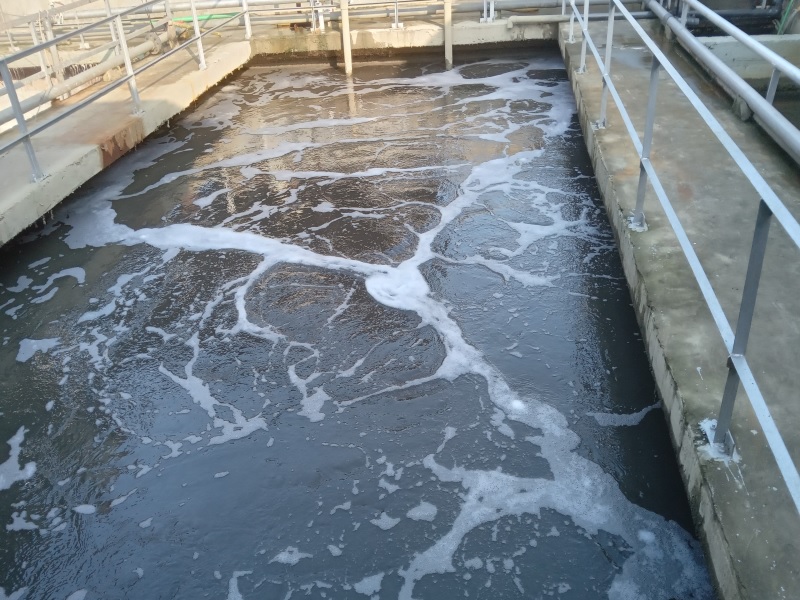
Here, pre-treated sewage is mixed with activated sludge containing a large population of microorganisms. An aeration system supplies oxygen to the mixed liquor. The microorganisms use the available oxygen to biologically oxidize biodegradable organic pollutants. During this process, microorganisms consume organic matter and convert it into:
- Carbon dioxide
- Water
- New biological cell mass
- Other stable biological products
The aeration tank must be carefully designed and operated to maintain appropriate conditions for microbial activity. Important operating parameters include:
- Dissolved Oxygen (DO)
- MLSS
- MLVSS
- F/M ratio
- SRT
- pH
- Temperature
- Hydraulic Retention Time
Maintaining the correct balance of these parameters is essential for achieving consistent treatment performance.
6. Aeration System
The aeration system plays a critical role in the performance of an ASP STP. Its primary purpose is to supply sufficient oxygen to the microorganisms while maintaining proper mixing within the aeration tank. Common aeration equipment includes:
- Fine bubble diffusers
- Coarse bubble diffusers
- Air blowers
- Mechanical surface aerators
- Jet aeration systems
Fine bubble aeration is widely used because it can provide efficient oxygen transfer when properly designed and maintained. Modern ASP STPs may also use:
- High-efficiency blowers
- Variable Frequency Drives (VFD)
- Dissolved Oxygen sensors
- Automatic blower control
- Online monitoring systems
These technologies can help optimize oxygen delivery and reduce unnecessary energy consumption.
7. Secondary Clarifier
After the aeration process, the mixed liquor flows into a secondary clarifier. The purpose of the secondary clarifier is to separate biological solids from the treated water. Inside the clarifier, the activated sludge settles to the bottom under gravity. The clarified water moves toward the upper section and is collected for subsequent treatment or discharge. The settled sludge is divided into two primary streams:
Return Activated Sludge (RAS)
A portion of the settled sludge is continuously returned to the aeration tank.
This maintains an appropriate concentration of microorganisms within the biological reactor.
Waste Activated Sludge (WAS)
The remaining excess sludge is removed from the system and sent for sludge treatment.
Effective RAS and WAS management is essential for maintaining stable biological conditions.
8. Tertiary Treatment and Disinfection
Depending on the required final water quality, the treated effluent from the secondary clarifier may undergo additional treatment. Possible tertiary treatment processes include:
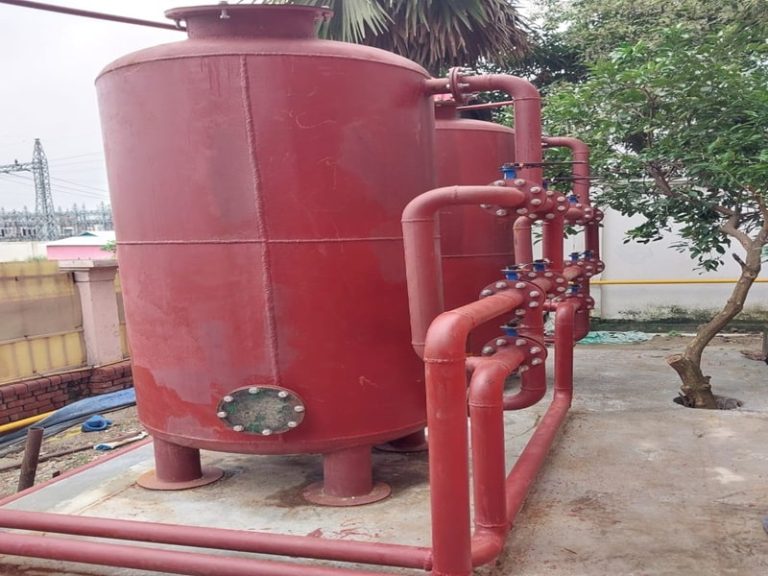
- Sand filtration
- Multimedia filtration
- Activated carbon filtration
- Membrane filtration
- Ultrafiltration
- Advanced polishing systems
Disinfection may be carried out using:
- Chlorination
- Sodium hypochlorite
- UV disinfection
- Other approved disinfection technologies
The final treatment configuration depends on the intended use of the treated water and applicable regulatory requirements.
9. Treated Water Reuse
One of the major advantages of a properly designed ASP STP is the potential for treated wastewater reuse. Depending on the final treatment quality, treated water may be considered for applications such as:
- Toilet flushing
- Landscape irrigation
- Gardening
- Road cleaning
- Cooling applications
- Other non-potable purposes
For reuse applications, additional tertiary treatment and disinfection may be necessary to achieve the required water quality. The exact reuse application should always be determined based on local regulations, risk assessment, and water quality requirements.
10. Sludge Management
Biological treatment generates excess sludge as microorganisms grow and accumulate within the system. Proper sludge management is an essential part of an ASP STP. The sludge treatment system may include:
Sludge Holding Tank → Sludge Thickening → Sludge Dewatering → Final Disposal
Depending on plant size and sludge characteristics, dewatering may be carried out using:
- Filter press
- Screw press
- Belt filter press
- Centrifuge
- Other suitable dewatering systems
The dewatered sludge should be managed and disposed of in accordance with applicable environmental regulations.
Activated Sludge Process STP for Domestic Sewage
ASP is particularly suitable for domestic sewage because it contains a significant proportion of biodegradable organic matter. Typical sources include:
- Residential buildings
- Apartment complexes
- Housing projects
- Hotels
- Resorts
- Offices
- Schools
- Universities
- Hospitals
- Shopping malls
- Commercial buildings
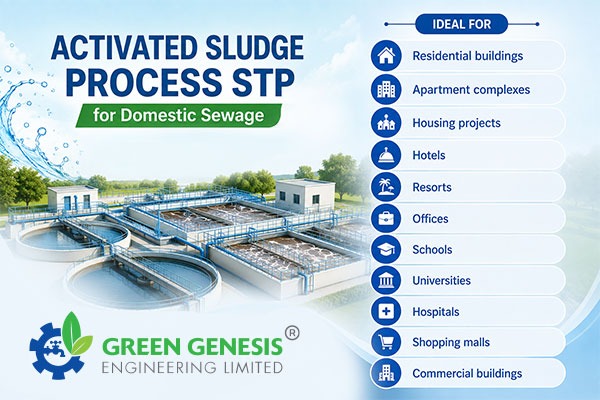
For large residential or commercial developments, an ASP STP can be designed according to the projected population, wastewater generation, influent characteristics, and required treated effluent quality.
Activated Sludge Process STP for Commercial Applications
Commercial facilities generate wastewater with varying flow patterns and pollutant loads. ASP-based STPs can be engineered for applications such as:
- Hotels
- Restaurants
- Shopping centers
- Corporate offices
- Convention centers
- Educational institutions
- Healthcare facilities
The system design should consider peak flow, daily variation, grease and oil loading, and other wastewater characteristics. For restaurants and food-related facilities, appropriate grease removal and preliminary treatment may be necessary before biological treatment.
Activated Sludge Process STP for Industrial Applications
ASP technology may also be used for selected industrial wastewater applications where the wastewater contains biodegradable organic matter. Potential applications may include:
- Food processing
- Beverage industries
- Dairy wastewater
- Pharmaceutical wastewater
- Certain chemical industries
- Manufacturing facilities
However, industrial wastewater often contains substances that may inhibit biological microorganisms. Therefore, industrial ASP STP design should be based on detailed wastewater characterization and, where necessary, laboratory treatability studies or pilot testing.
Pre-treatment may be required to control:
- pH
- Toxic compounds
- Heavy metals
- High salinity
- Oil and grease
- Extreme organic loading
Advantages of Activated Sludge Process STP
ASP STP technology offers several benefits when properly designed and operated.
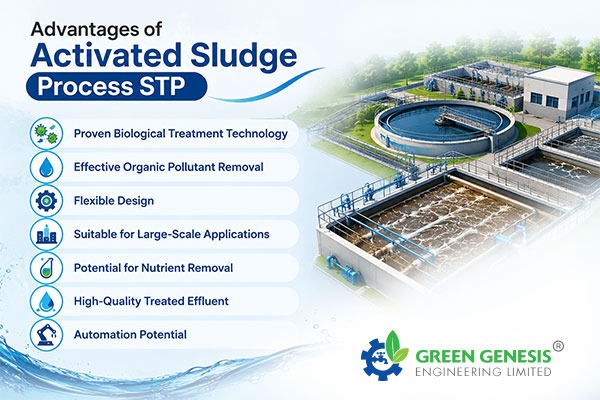
Proven Biological Treatment Technology: Activated Sludge is one of the most established biological wastewater treatment processes worldwide.
Effective Organic Pollutant Removal: The process is capable of achieving significant removal of biodegradable organic matter.
Flexible Design: ASP systems can be designed for a wide range of capacities and wastewater treatment requirements.
Suitable for Large-Scale Applications: The process can be effectively implemented for municipal and large commercial sewage treatment facilities.
Potential for Nutrient Removal: With appropriate reactor configurations, ASP systems can be designed for biological nitrogen and phosphorus removal.
High-Quality Treated Effluent: When properly engineered and operated, ASP STPs can produce treated effluent suitable for further polishing, reuse, or compliant discharge.
Automation Potential: Modern ASP plants can incorporate sensors, PLC-based automation, SCADA systems, and automatic process control.
Challenges of ASP STP
Like any wastewater treatment technology, ASP has certain operational challenges.
Energy Consumption: Aeration can represent a significant portion of the plant's energy consumption.
Skilled Operation: Maintaining stable biological conditions requires proper monitoring and experienced operation.
Sludge Management: The process continuously generates excess biological sludge that must be properly handled.
Sludge Settling Problems: Poor biological conditions may result in sludge bulking or poor settling.
Sensitivity to Toxic Shock Loads: Sudden introduction of toxic or inhibitory substances can negatively affect the microbial population. These challenges can be minimized through proper engineering, process control, preventive maintenance, and regular monitoring.
Important Parameters for ASP STP Operation
The performance of an Activated Sludge Process STP depends on maintaining appropriate biological and operational conditions.
Key parameters include:
Dissolved Oxygen (DO): Controls oxygen availability for aerobic microorganisms.
MLSS: Represents the concentration of suspended solids in the aeration tank.
MLVSS: Provides an indication of the organic or biological fraction of suspended solids.
F/M Ratio: Indicates the relationship between organic loading and the microorganism population.
SRT: Represents the average time biological solids remain in the treatment system.
SVI: Used to evaluate the settling characteristics of activated sludge.
pH: Microorganisms generally require a suitable pH range for stable biological activity.
BOD and COD: Used to evaluate the organic strength of wastewater and treatment efficiency.
Regular monitoring of these parameters helps operators maintain stable plant performance.
ASP STP vs. MBBR STP: Both ASP and MBBR are widely used biological wastewater treatment technologies, but their biological treatment mechanisms are different. In an ASP STP, microorganisms are primarily maintained in suspended form within the aeration tank. In an MBBR STP, microorganisms grow as biofilm on specially designed carrier media that move within the reactor. ASP can be an attractive choice where conventional suspended-growth treatment is preferred and sufficient operational control is available. MBBR may be advantageous where compact reactor volumes, process intensification, or retrofit applications are important. The appropriate technology should be selected after evaluating site conditions, wastewater characteristics, land availability, energy requirements, and project objectives.
ASP STP vs. SBR STP
The conventional ASP process generally uses separate aeration and clarification tanks.
An SBR (Sequencing Batch Reactor) performs different treatment phases within the same reactor in a time-based sequence. ASP may be preferred for continuous-flow applications with separate biological and clarification units, while SBR can be useful where land availability or batch operation provides specific advantages. Both technologies use biological microorganisms to treat wastewater, but their hydraulic and operational configurations are different.
Energy-Efficient ASP STP Solutions
Energy efficiency is becoming increasingly important in modern wastewater treatment.
Since aeration can consume a substantial amount of energy, optimizing oxygen transfer is a key strategy for reducing operating costs. Modern ASP STP systems can incorporate:
- Fine bubble diffusers
- High-efficiency blowers
- VFD-controlled blowers
- DO-based aeration control
- Automated process monitoring
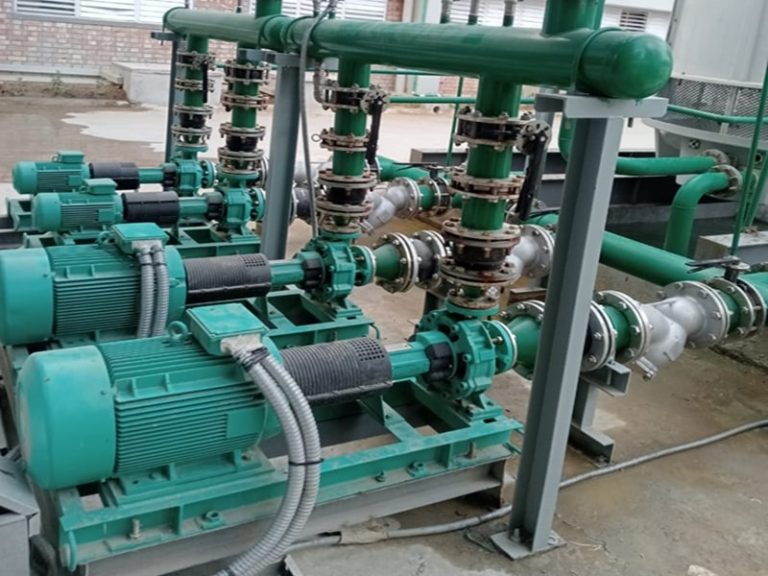
- Efficient pump selection
- Optimized aeration cycles
Proper process design can help balance treatment performance with energy consumption.
Automation and Smart Monitoring
Modern ASP STPs can be equipped with advanced automation and monitoring systems. A centralized PLC and SCADA system can monitor and control important plant functions, including:
- Blower operation
- Dissolved Oxygen
- Pump operation
- Tank levels
- Flow rates
- Equipment alarms
- Chemical dosing
- Operating status
Automation can improve process consistency, reduce manual intervention, and help operators identify potential problems at an early stage.
Design Considerations for an ASP STP
Every ASP STP should be individually designed based on actual project requirements.
Important design inputs include:
- Daily wastewater flow
- Peak hourly flow
- Population equivalent
- BOD
- COD
- TSS
- Ammonia
- Total Nitrogen
- Total Phosphorus
- pH
- Temperature
- Wastewater variability
- Required treated water quality
- Available land
- Future expansion requirements
A professional engineering assessment is essential before finalizing the treatment process and equipment selection.
Why Choose an Activated Sludge Process STP?
An Activated Sludge Process STP offers a combination of proven biological performance, design flexibility, and scalability. When properly engineered, the system can effectively treat domestic sewage and suitable biodegradable wastewater while providing opportunities for advanced nutrient removal and treated water reuse. The success of an ASP STP depends on more than simply installing an aeration tank. The entire system—from preliminary treatment and aeration to secondary clarification, sludge recycling, disinfection, and sludge management—must work together as an integrated treatment process.
Professional ASP STP Solutions
A successful Activated Sludge Process STP begins with a clear understanding of wastewater characteristics and project objectives. Professional engineering teams can evaluate wastewater flow, pollutant loading, site conditions, treatment standards, energy requirements, and future operational needs to develop a suitable treatment solution. From process selection and detailed engineering to equipment supply, installation, commissioning, automation, and after-sales support, every stage plays an important role in achieving reliable long-term performance. Whether you are developing a residential project, commercial facility, hotel, hospital, industrial facility, or institutional complex, an appropriately designed ASP STP can provide a dependable solution for effective sewage treatment.
Frequently Asked Questions (FAQs) About Activated Sludge Process (ASP) STP
1. What is an Activated Sludge Process (ASP) STP?
An Activated Sludge Process (ASP) STP is a biological sewage treatment system that uses naturally occurring microorganisms to break down biodegradable organic pollutants in wastewater. The process typically uses an aeration tank, secondary clarifier, and sludge recycling system to treat sewage and produce clarified treated effluent.
2. How does an Activated Sludge Process STP work?
In an ASP STP, sewage first passes through preliminary treatment to remove large solids and grit. The wastewater then enters an aeration tank, where microorganisms consume biodegradable organic matter in the presence of oxygen. The mixed liquor then flows to a secondary clarifier, where biological solids settle. A portion of the settled sludge is returned to the aeration tank as Return Activated Sludge (RAS), while excess sludge is removed for further treatment.
3. What is the main purpose of an ASP STP?
The primary purpose of an ASP STP is to reduce biodegradable organic pollutants, suspended solids, and other contaminants from domestic sewage or suitable biodegradable wastewater. Depending on the system configuration, it can also be designed for nitrogen and phosphorus removal.
4. What are the main components of an Activated Sludge STP?
A typical ASP STP may include an inlet chamber, screening system, grit removal unit, equalization tank, aeration tank, air blowers, diffusers, secondary clarifier, sludge return system, sludge holding tank, disinfection unit, and treated water outlet. Additional tertiary treatment units may be added depending on the required effluent quality.
5. What is the role of the aeration tank in an ASP STP?
The aeration tank is the main biological treatment unit. It contains activated sludge microorganisms that consume biodegradable organic matter in wastewater. Air or oxygen is supplied through blowers and diffusers to support microbial activity and maintain the required dissolved oxygen level.
6. Why is oxygen required in the Activated Sludge Process?
Oxygen is essential for aerobic microorganisms to biologically break down biodegradable organic pollutants. Proper oxygen supply supports microbial activity, helps maintain stable treatment performance, and contributes to effective BOD removal.
7. What is Return Activated Sludge (RAS)?
Return Activated Sludge, commonly called RAS, is the portion of settled biological sludge that is recycled from the secondary clarifier back to the aeration tank. Returning this sludge helps maintain the required concentration of microorganisms within the biological treatment system.
8. What is Waste Activated Sludge (WAS)?
Waste Activated Sludge (WAS) is the excess biological sludge that must be removed from the Activated Sludge Process to control the amount of solids and maintain the desired sludge age. WAS is normally sent to a sludge holding, thickening, digestion, or dewatering system.
9. What is the function of a secondary clarifier in an ASP STP?
The secondary clarifier separates biological solids from treated wastewater through gravity settling. The settled sludge is either returned to the aeration tank as RAS or removed as WAS, while the clarified water flows out for further treatment or final discharge.
10. What type of wastewater can be treated by an ASP STP?
ASP STPs are commonly used for domestic sewage and biodegradable wastewater generated by residential buildings, apartment complexes, hotels, offices, schools, hospitals, commercial facilities, and selected industrial applications.
11. Can an ASP STP treat industrial wastewater?
Yes, an ASP system can treat certain industrial wastewater streams when they contain biodegradable organic matter suitable for biological treatment. However, industrial wastewater should be carefully analyzed because toxic chemicals, heavy metals, high salinity, extreme pH, or other inhibitory substances may affect microorganisms. Pre-treatment may be necessary.
12. What is MLSS in an Activated Sludge STP?
MLSS stands for Mixed Liquor Suspended Solids. It represents the concentration of suspended solids present in the aeration tank mixed liquor. Maintaining an appropriate MLSS concentration is important for controlling the biological treatment process and achieving consistent performance.
13. What is MLVSS?
MLVSS stands for Mixed Liquor Volatile Suspended Solids. It generally represents the organic or biological fraction of the suspended solids present in the aeration tank. MLVSS is often used as an indicator of the active biomass concentration.
14. What is the F/M ratio in an ASP STP?
The Food-to-Microorganism (F/M) ratio represents the relationship between the organic load entering the biological treatment system and the amount of microorganisms available to treat that load. Maintaining a suitable F/M ratio is important for stable biological activity and good sludge characteristics.
15. What is Dissolved Oxygen (DO) in an ASP STP?
Dissolved Oxygen (DO) is the amount of oxygen dissolved in the wastewater or mixed liquor. It is a critical operating parameter in an aerobic Activated Sludge Process because microorganisms require oxygen to biologically degrade organic pollutants.
16. What happens if the DO level is too low in an ASP STP?
Insufficient DO can reduce aerobic microbial activity and may lead to poor organic matter removal. It can also contribute to undesirable sludge characteristics and unstable plant performance. The appropriate DO target depends on the specific process configuration and treatment objectives.
17. Can an ASP STP remove nitrogen?
Yes. An appropriately designed Activated Sludge Process can be configured for biological nitrogen removal. Nitrification converts ammonia to nitrate under aerobic conditions, while denitrification converts nitrate to nitrogen gas under anoxic conditions.
18. Can an ASP STP remove phosphorus?
Yes. Phosphorus removal can be incorporated into an ASP-based STP through enhanced biological phosphorus removal or chemical precipitation. The appropriate approach depends on the influent characteristics and required treated water quality.
19. What is sludge bulking in an ASP STP?
Sludge bulking is an operational problem in which activated sludge becomes difficult to settle properly in the secondary clarifier. It is often associated with excessive growth of filamentous microorganisms or unfavorable biological conditions. Proper process control and monitoring can help prevent or manage sludge bulking.
20. What is SVI in an Activated Sludge Process?
SVI, or Sludge Volume Index, is a commonly used parameter for evaluating the settling characteristics of activated sludge. It helps operators assess whether biological solids are settling effectively in the secondary clarifier.
21. How much land is required for an ASP STP?
The land requirement depends on the plant capacity, process configuration, hydraulic loading, tank dimensions, sludge management system, and required treatment stages. A detailed engineering design is necessary to determine the actual footprint of an ASP STP.
22. Is an ASP STP suitable for residential buildings?
Yes. ASP STPs are widely used for treating domestic sewage generated by apartment buildings, housing developments, residential complexes, and other communities. The plant capacity should be designed based on the expected population, wastewater generation, peak flow, and required effluent quality.
23. Is an ASP STP suitable for hotels and commercial buildings?
Yes. ASP technology can be used for hotels, resorts, offices, shopping centers, schools, hospitals, and other commercial or institutional facilities. The design should consider variations in daily wastewater flow and pollutant loading.
24. What is the difference between ASP STP and MBBR STP?
In an ASP STP, microorganisms primarily grow as suspended biomass within the aeration tank. In an MBBR STP, microorganisms grow mainly as biofilm attached to specially designed moving carrier media. Both are biological treatment technologies, but their reactor configurations and operating principles are different.
25. What is the difference between ASP STP and SBR STP?
A conventional ASP STP generally uses separate aeration and secondary clarification units operating in a continuous-flow arrangement. An SBR performs different treatment stages, including aeration and settling, sequentially within the same reactor. The choice depends on flow characteristics, land availability, treatment objectives, and operational preferences.
26. Does an ASP STP require regular maintenance?
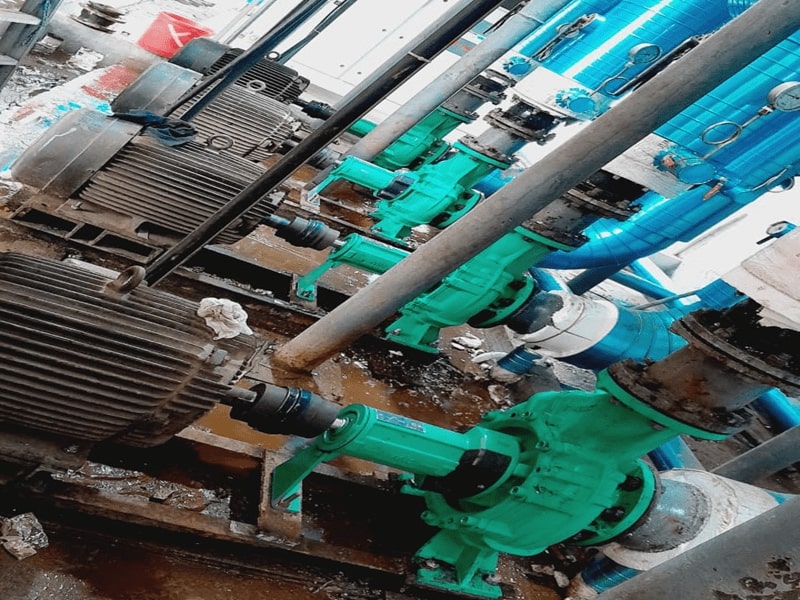
Yes. Regular maintenance is essential for reliable performance. Important maintenance activities include blower servicing, diffuser inspection, pump maintenance, sludge removal, instrument calibration, clarifier inspection, and routine monitoring of biological parameters.
27. How can energy consumption be reduced in an ASP STP?
Energy efficiency can be improved through efficient blowers, fine-bubble aeration, VFD-controlled motors, automatic DO control, optimized aeration strategies, proper equipment selection, and regular preventive maintenance.
28. Can treated water from an ASP STP be reused?
Yes, depending on the quality of the treated effluent and applicable regulations. With appropriate tertiary treatment and disinfection, treated wastewater may be considered for non-potable applications such as toilet flushing, landscaping, gardening, and other suitable reuse purposes.
29. How is sludge generated in an ASP STP managed?
Excess biological sludge is periodically removed from the system and may be transferred to a sludge holding or thickening unit. Depending on the plant design, it may then undergo dewatering using equipment such as a filter press, screw press, belt filter press, or centrifuge before appropriate final management or disposal.
30. How do I choose the right Activated Sludge Process STP for my project?
The correct ASP STP design depends on wastewater flow, population or occupancy, BOD, COD, TSS, ammonia, nutrient levels, wastewater characteristics, available land, treated water requirements, local regulations, and future expansion plans. A professional wastewater treatment engineer should conduct a detailed assessment before finalizing the STP design.
31. What information is required to design an ASP STP?
Important information typically includes daily and peak wastewater flow, source of wastewater, population or occupancy, BOD, COD, TSS, pH, ammonia, nitrogen, phosphorus, available land, desired treated water quality, discharge or reuse requirements, and applicable environmental standards.
32. Why should I choose a professionally designed ASP STP?
Professional engineering ensures that the biological process, aeration system, clarifier, sludge recycling, sludge management, and disinfection systems are properly integrated. A well-designed ASP STP can provide reliable treatment performance, efficient operation, easier maintenance, and better long-term value.
Final Thoughts
The Activated Sludge Process (ASP) STP is a reliable and well-established solution for biological sewage treatment. With proper engineering, process control, regular monitoring, and professional operation, it can provide effective treatment for residential, commercial, institutional, municipal, and selected industrial wastewater applications. Green Genesis Engineering Limited can develop wastewater treatment solutions based on specific project requirements, wastewater characteristics, treatment objectives, and applicable environmental standards.
Conclusion
The Activated Sludge Process (ASP) STP remains one of the most established and versatile technologies for biological sewage treatment. By combining aerobic microorganisms, controlled oxygen supply, biological treatment, secondary clarification, and sludge recycling, ASP systems can effectively reduce organic pollution and produce high-quality treated effluent. With modern aeration technology, automation, process monitoring, and energy-efficient equipment, today's ASP STPs can deliver improved performance while addressing the growing demand for sustainable wastewater management. The right ASP STP is not simply a collection of tanks and equipment—it is an integrated biological treatment system designed around the specific wastewater characteristics, site conditions, regulatory requirements, and long-term goals of each project. Activated Sludge Process STP – Reliable Biological Treatment for Cleaner Water, Healthier Communities, and a Sustainable Future.