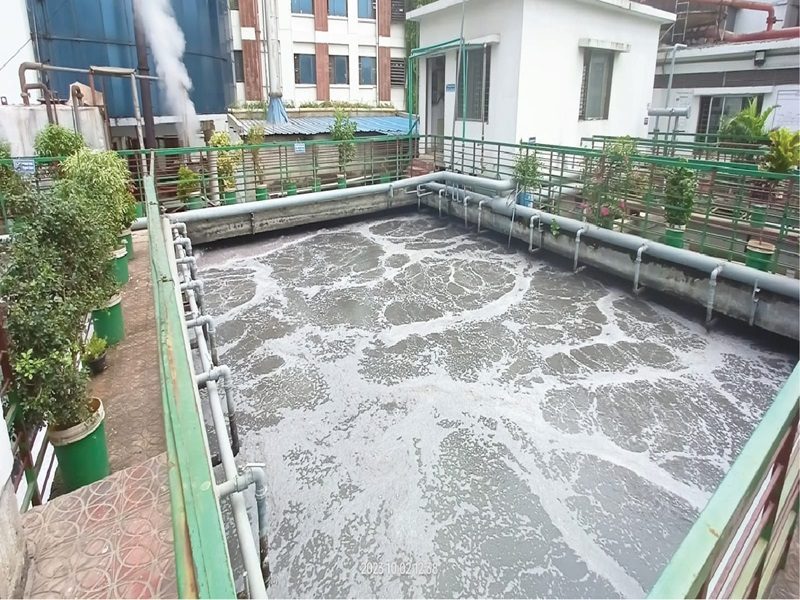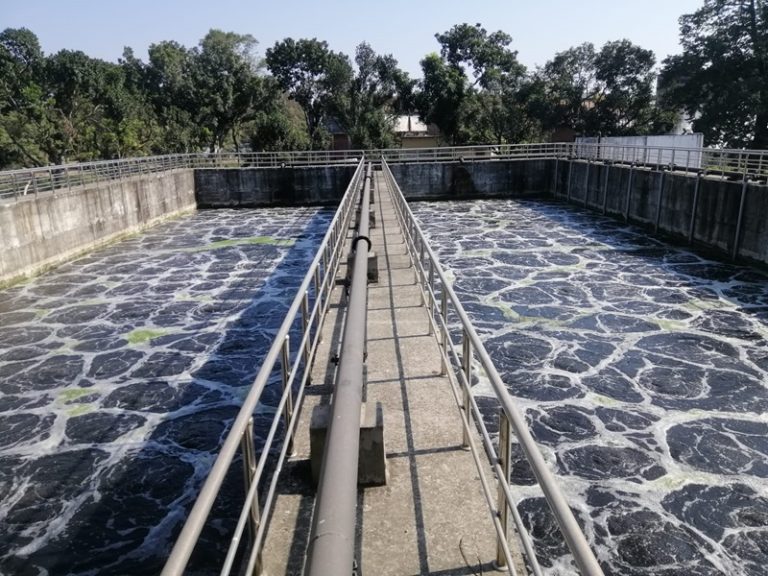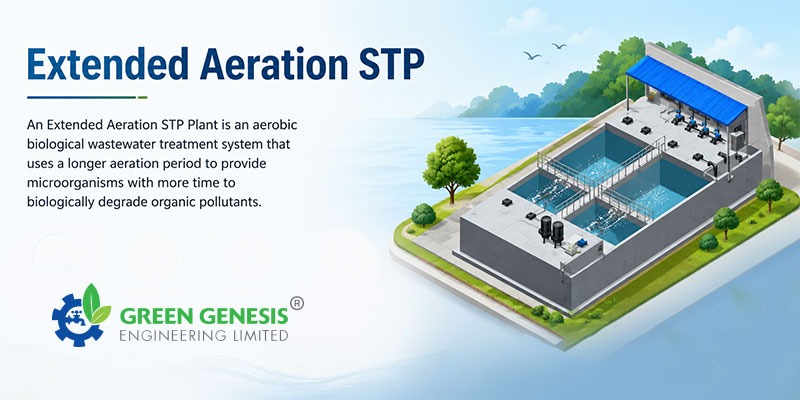
Introduction
An Extended Aeration STP Plant is a biological sewage treatment system designed to treat domestic wastewater through prolonged aeration and microbial activity. It is a modified form of the Activated Sludge Process in which wastewater remains in the biological treatment stage for a relatively longer period, allowing microorganisms sufficient time to break down biodegradable organic pollutants.
The Extended Aeration Process is widely considered for residential buildings, apartment complexes, hotels, resorts, schools, hospitals, commercial facilities, institutional campuses, and other projects where reliable sewage treatment and relatively simple operation are required. The process uses aerobic microorganisms that consume biodegradable organic matter in the presence of oxygen. Air is supplied to the biological reactor through blowers and diffusers, creating the conditions necessary for microorganisms to grow and treat the wastewater. Compared with conventional activated sludge systems, Extended Aeration STPs generally operate at a lower organic loading and longer sludge age. This can result in lower excess sludge production and improved process stability when the system is properly designed and operated. A well-engineered Extended Aeration STP Plant can provide effective removal of BOD and suspended solids and can be configured to support additional nutrient removal where required.
What is an Extended Aeration STP Plant?
An Extended Aeration STP Plant is an aerobic biological wastewater treatment system that uses a longer aeration period to provide microorganisms with more time to biologically degrade organic pollutants. The process is based on the principle of suspended-growth biological treatment. In simple terms:
Sewage + Microorganisms + Oxygen + Sufficient Contact Time = Biological Wastewater Treatment
During the treatment process, microorganisms consume biodegradable organic matter present in sewage. The organic pollutants are converted into:
- Carbon dioxide
- Water
- New microbial biomass
- Other stable biological products
Because the process operates with a relatively long sludge age, microorganisms have more time to remain in the biological system and break down organic matter. This operating principle makes Extended Aeration particularly suitable for applications where consistent treatment performance and lower sludge production are important considerations.
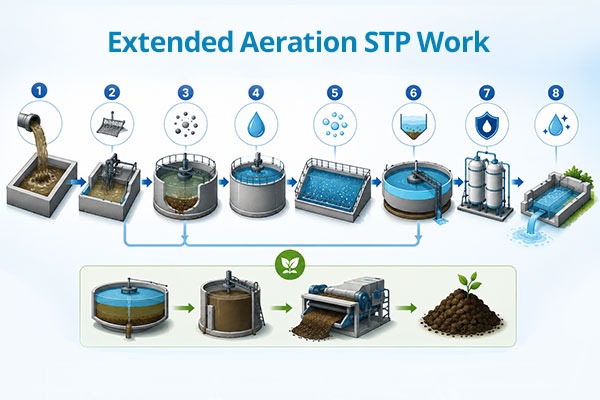
How Does an Extended Aeration STP Work?
A typical Extended Aeration STP may operate through the following treatment sequence:
Raw Sewage
↓
Screening
↓
Grit Removal
↓
Equalization / Collection
↓
Extended Aeration Biological Reactor
↓
Secondary Clarifier
↓
Tertiary Treatment
↓
Disinfection
↓
Treated Water
The sludge generated during the process may be managed through:
Secondary Clarifier
↓
Sludge Collection
↓
Sludge Holding Tank
↓
Sludge Dewatering
↓
Final Management
The actual process configuration depends on plant capacity, wastewater characteristics, site conditions, and final treated water requirements.
Principle of Extended Aeration Process
The fundamental principle of Extended Aeration is to maintain microorganisms in an aerobic environment for a longer period than conventional activated sludge treatment. Air is continuously supplied to the biological reactor using blowers and diffusers. The supplied oxygen supports the growth and activity of aerobic microorganisms. When wastewater enters the aeration tank, the microorganisms come into contact with biodegradable organic matter. They consume the organic pollutants as a food source and convert them into stable end products and additional biomass. The biological process can be summarized as:
Organic Pollutants in Sewage
↓
Microbial Consumption
↓
Aerobic Biological Oxidation
↓
Stable End Products + Biomass
The treated mixed liquor then flows to the secondary clarifier, where biological solids settle. A portion of the settled sludge may be returned to the aeration tank to maintain the required microorganism concentration, while excess sludge is removed for sludge management.
Main Components of an Extended Aeration STP
A complete Extended Aeration STP may include the following treatment units.
1. Inlet Chamber
The inlet chamber receives raw sewage from the wastewater collection network. It provides a controlled entry point into the treatment system.
2. Screening System
Screening removes large solids and floating materials from incoming sewage. Typical materials include:
- Plastics
- Paper
- Cloth
- Sanitary waste
- Packaging materials
- Large debris
Effective screening protects downstream pumps, blowers, diffusers, and other equipment.
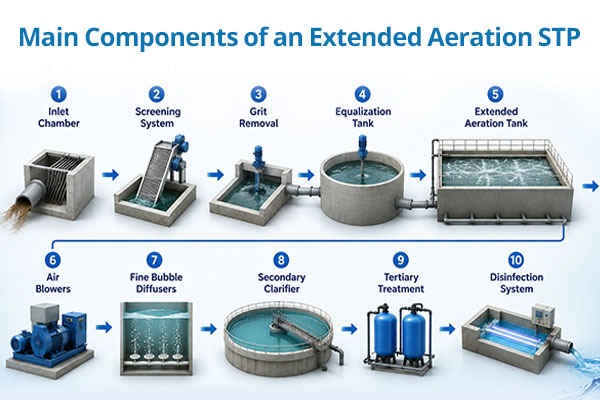
3. Grit Removal
Grit removal may be provided to remove heavy inorganic particles such as:
- Sand
- Gravel
- Small stones
- Glass
- Other dense materials
Removing grit helps prevent unwanted accumulation and mechanical wear.
4. Equalization Tank
An equalization tank may be included to balance variations in wastewater flow and pollutant concentration. This is particularly useful for facilities where wastewater generation changes significantly throughout the day. Equalization can help provide a more stable flow to the biological treatment process.
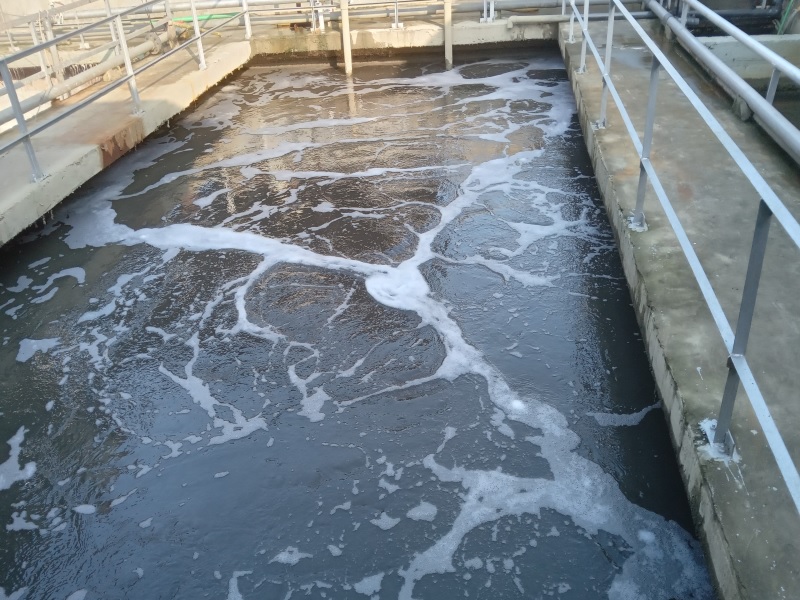
5. Extended Aeration Tank
The Extended Aeration Tank is the primary biological treatment unit. It contains a mixture of wastewater and activated microorganisms known as mixed liquor. Air is continuously introduced through diffusers to maintain aerobic conditions. The microorganisms consume biodegradable organic matter and reduce the organic pollution load. The aeration tank is designed with sufficient volume and retention time to support the extended aeration process.
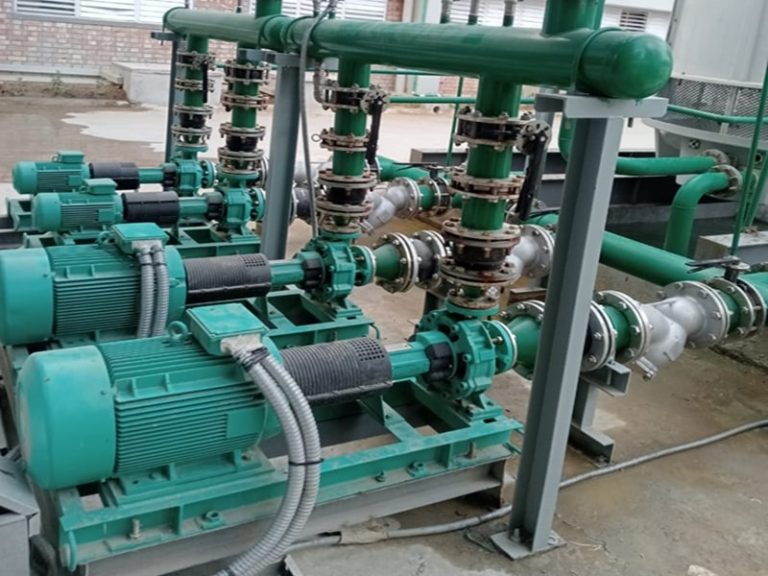
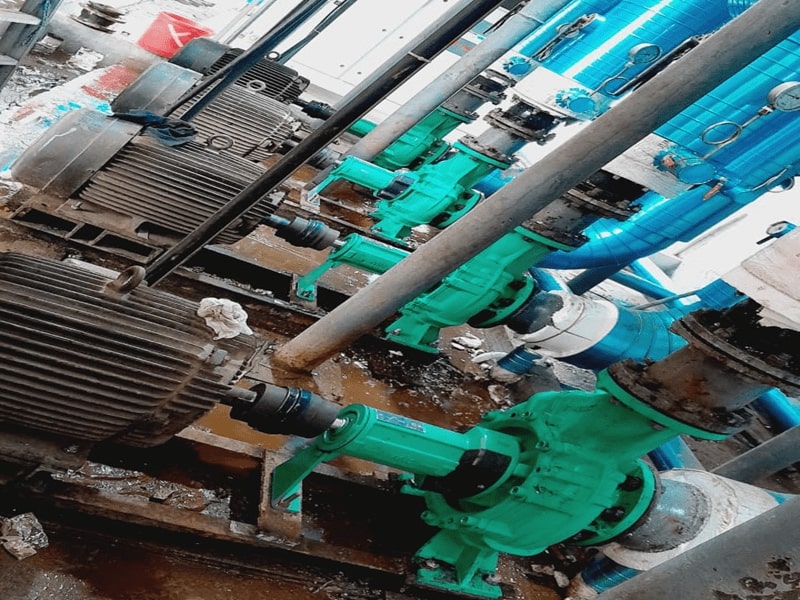
6. Air Blowers
Blowers provide the air required for biological treatment. The blower system should be properly selected according to:
- Oxygen demand
- Wastewater flow
- Organic loading
- Tank depth
- Diffuser type
- Operating conditions
Energy-efficient blowers and automatic control systems can help reduce operating costs.
7. Fine Bubble Diffusers
Fine bubble diffusers distribute air throughout the aeration tank. Smaller air bubbles generally provide greater air-water contact and can improve oxygen transfer efficiency. The diffuser system should be properly designed and maintained to prevent clogging and uneven air distribution.
8. Secondary Clarifier
After biological treatment, the mixed liquor flows to the secondary clarifier. The clarifier separates biological solids from treated water through gravity settling. Settled sludge is collected at the bottom. A portion may be returned to the aeration tank as Return Activated Sludge, while excess sludge is removed for further treatment.
9. Tertiary Treatment
Depending on the required final water quality, additional treatment may be provided after clarification. Possible tertiary treatment units include:
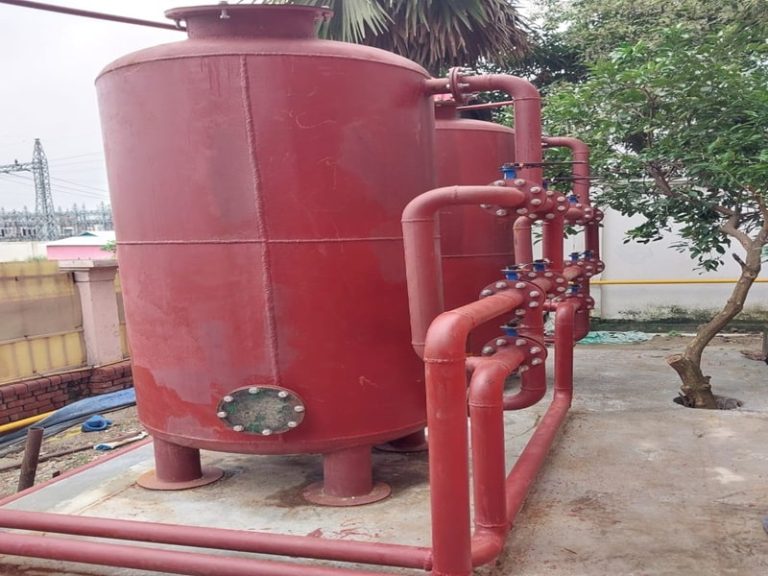
- Pressure Sand Filter
- Multimedia Filter
- Activated Carbon Filter
- Micron Filtration
- Ultrafiltration
- Membrane Systems
The selection depends on whether the treated water will be discharged or reused.
10. Disinfection System
Disinfection helps reduce pathogenic microorganisms in the final treated water. Common options include:
- UV disinfection
- Chlorination
- Sodium hypochlorite dosing
The appropriate method depends on the final application and applicable standards.
Extended Aeration STP Process Flow
A typical Extended Aeration STP may follow this sequence:
Raw Sewage
↓
Screen Chamber
↓
Grit Removal
↓
Equalization Tank
↓
Extended Aeration Tank
↓
Secondary Clarifier
↓
Tertiary Filtration
↓
Disinfection
↓
Treated Water
The sludge flow may be:
Secondary Clarifier Sludge
↓
Sludge Holding Tank
↓
Sludge Dewatering
↓
Final Disposal / Management
The process flow can be customized based on the project's wastewater characteristics and required treated effluent quality.
Why Is Aeration Important in Extended Aeration STP?
Aeration is the central part of the Extended Aeration process. Microorganisms require oxygen to biologically oxidize biodegradable organic matter. The aeration system performs several functions:
- Supplies oxygen to microorganisms
- Maintains aerobic conditions
- Keeps biological solids suspended
- Promotes microbial activity
- Supports BOD removal
- Helps maintain stable biological treatment
Insufficient aeration can negatively affect biological performance. Excessive aeration, on the other hand, can increase energy consumption unnecessarily. Therefore, proper aeration design and control are essential.
Role of Microorganisms in Extended Aeration
Microorganisms are responsible for the biological treatment of sewage. They consume biodegradable organic matter as a source of food and energy. Different microbial populations may perform different functions within the biological reactor. Some microorganisms primarily degrade organic matter, while specialized microorganisms can support nitrification when suitable conditions are maintained.
The health and activity of the microbial population depend on:
- Dissolved Oxygen
- pH
- Temperature
- Organic loading
- Nutrient availability
- Sludge age
- Hydraulic retention time
Maintaining balanced operating conditions is essential for reliable treatment.
Extended Aeration and Sludge Age
One of the defining characteristics of Extended Aeration is its relatively long sludge age.
A longer sludge age allows microorganisms to remain in the biological system for an extended period.
This can provide several benefits, including:
- Better stabilization of organic matter
- Lower excess sludge production
- Improved process stability
- Potential for nitrification
- Greater tolerance to variations in organic loading
However, sludge age must still be properly controlled according to the process design.
Sludge Production in Extended Aeration STP
Extended Aeration systems generally produce less excess biological sludge than conventional activated sludge systems operating at higher organic loading. The longer biological retention time allows a greater degree of endogenous respiration and biological stabilization. However, sludge is still produced and must be properly managed.
Typical sludge management may include:
Sludge Collection → Sludge Holding → Thickening → Dewatering → Final Disposal
The actual sludge handling system depends on plant size and local requirements.
Advantages of Extended Aeration STP
Extended Aeration STP technology offers several potential advantages.
Lower Excess Sludge Production
The relatively long sludge age can reduce the amount of excess sludge generated compared with some conventional activated sludge configurations.
Stable Biological Treatment
The process can provide stable treatment performance when properly designed and operated.
Good BOD Removal
Extended Aeration systems are effective for removing biodegradable organic matter from domestic sewage.
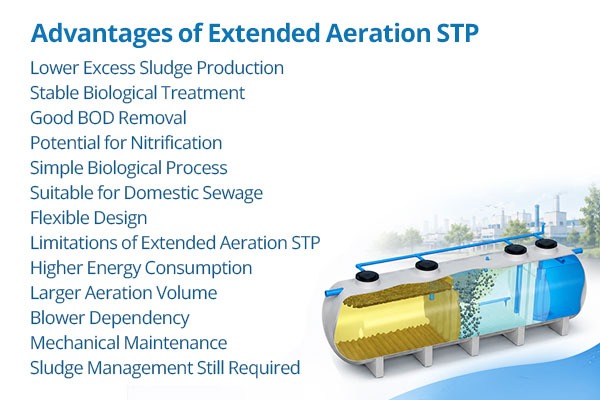
Potential for Nitrification
The longer sludge age can support nitrifying microorganisms when appropriate operating conditions are maintained.
Simple Biological Process
The process uses a well-established aerobic biological treatment principle.
Suitable for Domestic Sewage
The technology is widely considered for domestic wastewater generated by residential and commercial facilities.
Flexible Design
Extended Aeration can be configured for different capacities and applications.
Limitations of Extended Aeration STP
Despite its advantages, Extended Aeration also has some limitations.
Higher Energy Consumption
The process requires continuous aeration, which can result in significant energy consumption.
Larger Aeration Volume
Because of the longer retention time, the biological reactor may require a larger volume compared with some high-rate biological processes.
Blower Dependency
Reliable blower operation is critical to maintaining adequate oxygen levels.
Mechanical Maintenance
Blowers, diffusers, pumps, and control equipment require regular maintenance.
Sludge Management Still Required
Although sludge production may be lower, excess sludge must still be periodically removed and managed.
Extended Aeration STP vs. Conventional ASP STP
Extended Aeration is a modified form of the Activated Sludge Process. The primary difference is the operating conditions.
Extended Aeration
- Longer sludge age
- Lower organic loading
- Longer aeration period
- Lower excess sludge production
- Potentially greater process stability
Conventional ASP
- Higher organic loading
- Shorter sludge age
- Higher biomass turnover
- Generally higher sludge production
The selection between these systems depends on wastewater characteristics, land availability, energy requirements, and project objectives.
Extended Aeration STP vs. MBBR STP
Extended Aeration uses suspended microorganisms in the mixed liquor. MBBR uses microorganisms that grow primarily as biofilm on moving carrier media. Extended Aeration generally requires larger aeration volumes but has a straightforward biological process. MBBR can provide a more compact biological reactor and may offer greater flexibility for upgrading existing plants. The appropriate technology depends on project-specific conditions.
Extended Aeration STP vs. SBR STP
Extended Aeration is generally designed as a continuous-flow biological treatment system with separate clarification. SBR performs treatment in cycles within the same reactor. An SBR can integrate biological treatment and settling in one tank, while Extended Aeration typically uses a dedicated secondary clarifier. Both technologies can provide effective biological treatment when properly designed.
Applications of Extended Aeration STP
Extended Aeration STPs are suitable for many domestic wastewater applications. Typical applications include:
- Apartment Buildings
- Residential Communities
- Housing Projects
- Hotels
- Resorts
- Schools
- Universities
- Hospitals
- Office Buildings
- Commercial Complexes
- Institutional Facilities
- Small Communities
The system can be designed for different capacities according to wastewater generation and treatment requirements.
Extended Aeration STP for Residential Buildings
Residential wastewater generally contains biodegradable organic matter suitable for biological treatment. An Extended Aeration STP can be designed based on:
- Number of residents
- Daily water consumption
- Wastewater generation
- Peak flow
- BOD loading
- Required effluent quality
The treated water may be considered for suitable non-potable reuse after appropriate tertiary treatment and disinfection.
Extended Aeration STP for Hotels and Resorts
Hotels and resorts may experience significant variations in wastewater generation depending on occupancy. An Extended Aeration STP can provide reliable biological treatment when properly sized for average and peak wastewater flows. Equalization may be beneficial where significant fluctuations occur.
Extended Aeration STP for Commercial and Institutional Facilities
Schools, offices, universities, and institutional facilities can benefit from Extended Aeration systems where domestic sewage is generated and reliable biological treatment is required.
For facilities with seasonal operation, the system design should consider periods of low occupancy and variable loading.
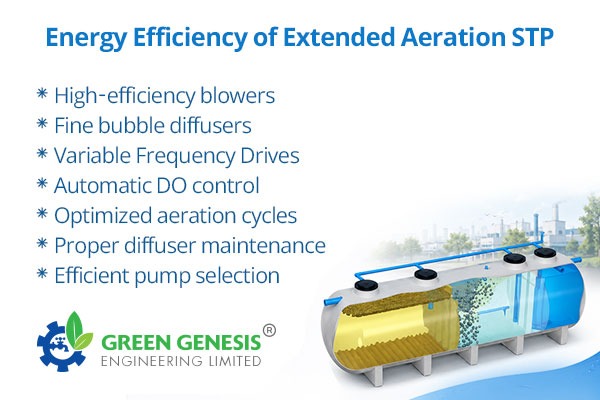
Energy Efficiency of Extended Aeration STP
Aeration is typically the largest energy-consuming part of an Extended Aeration STP. Energy efficiency can be improved through:
- High-efficiency blowers
- Fine bubble diffusers
- Variable Frequency Drives
- Automatic DO control
- Optimized aeration cycles
- Proper diffuser maintenance
- Efficient pump selection
Online dissolved oxygen monitoring can help maintain adequate oxygen levels without excessive aeration.
Automation and Control
Modern Extended Aeration STPs can be equipped with PLC-based automation. The system may control:
- Blowers
- Pumps
- Valves
- Aeration
- Chemical dosing
- Water levels
- DO levels
- Alarms
Advanced systems may incorporate SCADA for remote monitoring and operational data management. Automation can improve process consistency and reduce unnecessary energy consumption.
Treated Water Reuse
Properly treated wastewater from an Extended Aeration STP may be considered for non-potable applications when the final water quality meets the relevant requirements. Potential applications include:
- Toilet Flushing
- Gardening
- Landscape Irrigation
- Road Washing
- Other Approved Non-Potable Uses
Additional tertiary treatment and disinfection may be necessary depending on the intended reuse application. Treated sewage effluent should not be assumed to be suitable for drinking without a dedicated potable water treatment process and regulatory compliance.
Extended Aeration STP Design Considerations
A professional design should consider:
- Average wastewater flow
- Peak wastewater flow
- BOD
- COD
- TSS
- Ammonia
- Nitrogen
- Phosphorus
- pH
- Temperature
- Sludge age
- Hydraulic retention time
- Oxygen requirements
- Aeration efficiency
- Clarifier loading
- Sludge management
- Required effluent quality
- Future expansion
Accurate wastewater data helps ensure appropriate process selection and plant sizing.
Operation and Maintenance of Extended Aeration STP
Regular maintenance is essential for reliable operation. Important activities include:
- Cleaning screens
- Inspecting blowers
- Checking diffuser performance
- Monitoring DO
- Monitoring MLSS
- Checking sludge settling
- Removing excess sludge
- Maintaining pumps
- Cleaning filters
- Inspecting disinfection systems
- Calibrating instruments
Routine monitoring can help identify process problems before they become major operational issues.
Why Choose Extended Aeration STP?
An Extended Aeration STP can be an excellent option where the project requires:
- Reliable biological treatment
- Effective BOD removal
- Lower excess sludge production
- Potential nitrification
- Simple and established treatment technology
- Suitable performance for domestic sewage
The technology is particularly attractive for residential and commercial wastewater applications where reliable treatment and relatively straightforward operation are priorities. However, the system should always be designed according to actual wastewater flow, pollutant characteristics, available space, energy considerations, and required effluent quality.
Professional Extended Aeration STP Solutions
A successful Extended Aeration STP requires more than simply installing an aeration tank and blower. The complete system should be professionally engineered, including:
Wastewater Assessment
↓
Process Selection
↓
Hydraulic & Biological Design
↓
Aeration System Design
↓
Equipment Selection
↓
Manufacturing / Civil Construction
↓
Installation
↓
Commissioning
↓
Operator Training
↓
Performance Monitoring
↓
After-Sales Support
This integrated approach helps ensure reliable long-term performance and efficient operation.
Conclusion
The Extended Aeration STP Plant is a proven biological wastewater treatment technology that provides effective treatment of domestic sewage through prolonged aerobic biological activity.
By maintaining a relatively long sludge age and providing continuous aeration, the process allows microorganisms sufficient time to degrade biodegradable organic pollutants. This can result in effective BOD removal, lower excess sludge production, and potential support for nitrification. Extended Aeration STPs are widely considered for residential buildings, apartment complexes, hotels, resorts, schools, hospitals, offices, commercial facilities, and institutional projects. The long-term performance of an Extended Aeration STP depends on accurate design, proper aeration, appropriate sludge management, regular monitoring, and preventive maintenance. Extended Aeration STP – Reliable Biological Sewage Treatment Through Proven Aerobic Technology.
Frequently Asked Questions (FAQs) About Extended Aeration STP Plant
1. What is an Extended Aeration STP Plant?
An Extended Aeration STP Plant is an aerobic biological sewage treatment system that uses a relatively long aeration period and sludge age to allow microorganisms to break down biodegradable organic pollutants in wastewater.
2. How does an Extended Aeration STP work?
The process uses microorganisms suspended in wastewater. Air is continuously supplied through blowers and diffusers to maintain aerobic conditions. The microorganisms consume biodegradable organic matter, after which the treated mixed liquor flows to a secondary clarifier for separation of biological solids from treated water.
3. What is the principle of Extended Aeration?
The principle is based on maintaining a relatively long sludge age and providing sufficient oxygen and contact time for microorganisms to biologically oxidize organic pollutants. This allows greater biological stabilization and can reduce excess sludge production.
4. What is the difference between Extended Aeration and Activated Sludge Process?
Extended Aeration is a modified form of the Activated Sludge Process. It generally operates at a longer sludge age, lower organic loading, and longer aeration period than conventional activated sludge systems. This can provide lower sludge production and potentially greater process stability.
5. Does an Extended Aeration STP require an air blower?
Yes. Aerobic microorganisms require oxygen, so the biological reactor normally uses blowers and diffusers or another suitable aeration system to supply oxygen.
6. What is the role of the aeration tank?
The aeration tank is the main biological treatment unit. It contains wastewater mixed with microorganisms. Air is supplied to maintain aerobic conditions and support the microorganisms responsible for degrading organic pollutants.
7. What is MLSS in an Extended Aeration STP?
MLSS, or Mixed Liquor Suspended Solids, represents the concentration of suspended solids present in the aeration tank mixed liquor. It is an important operating parameter for monitoring the biological treatment process.
8. What is sludge age?
Sludge age, also called Solids Retention Time (SRT), represents the average length of time microorganisms remain in the biological treatment system. Extended Aeration generally operates with a longer sludge age than conventional activated sludge systems.
9. Does Extended Aeration produce less sludge?
Generally, Extended Aeration can produce less excess biological sludge than conventional activated sludge systems operating at higher loading rates. The longer sludge age allows more biological stabilization and endogenous respiration. However, sludge is still generated and requires proper management.
10. Can an Extended Aeration STP remove BOD?
Yes. Extended Aeration is highly suitable for removing biodegradable organic matter and can achieve effective BOD reduction when properly designed and operated.
11. Can an Extended Aeration STP remove COD?
It can remove the biodegradable portion of COD through biological treatment. Non-biodegradable COD may remain in the treated water and could require additional treatment depending on the wastewater characteristics.
12. Can an Extended Aeration STP remove ammonia?
Yes. Extended Aeration systems operating at an appropriate sludge age can support nitrification and ammonia removal. The actual performance depends on temperature, DO, loading, pH, alkalinity, and other operating conditions.
13. Can an Extended Aeration STP remove nitrogen?
Extended Aeration can support nitrification, but complete nitrogen removal generally requires both nitrification and denitrification. If strict total nitrogen limits apply, additional anoxic treatment stages may be necessary.
14. Can an Extended Aeration STP remove phosphorus?
The conventional Extended Aeration process is not specifically designed for high-level phosphorus removal. Where strict phosphorus limits apply, additional biological or chemical phosphorus removal may be incorporated.
15. What are the main advantages of Extended Aeration STP?
The major advantages include:
- Effective BOD removal
- Lower excess sludge production
- Potential for nitrification
- Stable biological treatment
- Proven technology
- Suitable for domestic sewage
- Relatively straightforward biological process
16. What are the disadvantages of Extended Aeration STP?
Potential limitations include:
- Continuous aeration requirements
- Relatively high energy consumption
- Larger aeration tank volume
- Dependence on blowers and diffusers
- Regular sludge management requirements
17. Is Extended Aeration suitable for residential buildings?
Yes. Extended Aeration is widely considered for apartment buildings, residential complexes, housing projects, and communities where domestic sewage is generated.
18. Is Extended Aeration suitable for hotels and resorts?
Yes. It can be suitable for hotels and resorts, provided the plant is correctly designed for average and peak flow, occupancy variations, and wastewater characteristics.
19. Can Extended Aeration treat hospital wastewater?
It can treat the biodegradable portion of hospital wastewater, but hospital sewage may require additional treatment and disinfection. A detailed wastewater assessment should be performed before selecting the treatment process.
20. Can Extended Aeration treat industrial wastewater?
It may be suitable for industrial wastewater that is biodegradable and does not contain substances that inhibit biological microorganisms. Industrial wastewater containing toxic chemicals, heavy metals, high salinity, or extreme pH may require pre-treatment or specialized treatment.
21. What is the difference between Extended Aeration and MBBR?
Extended Aeration primarily uses suspended microorganisms in the mixed liquor, while MBBR uses microorganisms growing mainly as biofilm on moving carrier media. MBBR can often achieve a more compact biological reactor, whereas Extended Aeration relies on longer aeration and sludge age.
22. What is the difference between Extended Aeration and SBR?
Extended Aeration generally operates as a continuous-flow process with a separate secondary clarifier. SBR performs treatment stages sequentially in the same reactor through programmed cycles.
23. Does Extended Aeration require a secondary clarifier?
In a conventional Extended Aeration configuration, a secondary clarifier is normally used to separate biological solids from the treated water.
24. What happens to the sludge collected in the clarifier?
The settled sludge may be returned to the aeration tank as Return Activated Sludge to maintain the biological population. Excess sludge is periodically removed and sent to a sludge holding or dewatering system.
25. How much energy does an Extended Aeration STP consume?
Energy consumption varies depending on plant capacity, wastewater loading, aeration depth, blower efficiency, diffuser performance, pumping requirements, and operating strategy. Aeration is generally one of the largest energy-consuming components.
26. How can energy consumption be reduced?
Energy efficiency can be improved through:
- High-efficiency blowers
- Fine-bubble diffusers
- Variable Frequency Drives
- Automatic DO control
- Efficient pumps
- Proper diffuser maintenance
- Optimized aeration control
27. Can treated water from Extended Aeration be reused?
Yes. Depending on the final water quality, treated water may be suitable for non-potable applications such as toilet flushing, gardening, and landscape irrigation after appropriate tertiary treatment and disinfection.
28. How much land is required for an Extended Aeration STP?
Land requirements depend on plant capacity, aeration tank volume, clarifier size, sludge handling, tertiary treatment, and equipment arrangement. Extended Aeration may require more biological reactor volume than some compact high-rate processes.
29. What maintenance does an Extended Aeration STP require?
Regular maintenance includes blower servicing, diffuser inspection, pump maintenance, sludge management, screen cleaning, DO monitoring, MLSS monitoring, clarifier inspection, filter cleaning, and control system maintenance.
30. What happens if the blower stops working?
If aeration stops for an extended period, dissolved oxygen can decrease, potentially affecting aerobic microorganisms and treatment performance. Therefore, blower reliability, preventive maintenance, and appropriate emergency arrangements are important.
31. What information is needed to design an Extended Aeration STP?
Important design information includes:
- Average wastewater flow
- Peak flow
- BOD
- COD
- TSS
- Ammonia
- Nitrogen
- Phosphorus
- pH
- Temperature
- Required effluent quality
- Available land
- Intended treated water use
32. How do I choose the right Extended Aeration STP?
The appropriate system should be selected based on wastewater flow, organic loading, required treatment performance, available space, energy requirements, sludge management, and applicable environmental standards.
33. Is Extended Aeration a good choice for Bangladesh?
Extended Aeration can be a suitable technology for many domestic sewage treatment applications in Bangladesh, including residential, commercial, institutional, and hospitality projects. However, the design should account for local climate, wastewater characteristics, site conditions, energy availability, and applicable environmental requirements.
34. Can an Extended Aeration STP be automated?
Yes. Modern systems can use PLC-based automation to control blowers, pumps, valves, aeration, chemical dosing, and alarms. Online DO monitoring and SCADA can also be integrated for advanced process monitoring.
35. Why should I choose a professionally designed Extended Aeration STP?
Professional engineering ensures proper sizing of the aeration tank, blower system, diffusers, clarifier, sludge handling, tertiary treatment, and disinfection systems. This helps improve treatment performance, energy efficiency, operational reliability, and long-term system life.
Final FAQ Summary
The Extended Aeration STP Plant is a reliable biological wastewater treatment solution particularly suited to domestic sewage applications. Its long sludge age and extended aeration period can provide effective organic matter removal, lower excess sludge production, and potential nitrification. The most important factors for successful operation are proper process design, sufficient oxygen supply, correct sludge management, regular monitoring, and preventive maintenance.
Write a Comment
Search
Popular Posts
ETP
STP
Categories
- STP (14)
- ETP (2)