Introduction
Rapid urbanization, industrial development, and population growth have significantly increased wastewater generation worldwide. Every apartment building, residential township, commercial complex, hospital, hotel, educational institution, shopping mall, factory, and municipality produces sewage that must be properly treated before discharge or reuse. Without effective treatment, untreated sewage contaminates rivers, lakes, canals, groundwater, and agricultural land, creating serious environmental and public health challenges.
To address these concerns, modern sewage treatment technologies have evolved considerably over the last few decades. Among them, the SBR STP Plant (Sequencing Batch Reactor) has become one of the most efficient, flexible, and environmentally friendly biological wastewater treatment technologies. Today, SBR technology is widely used across Europe, North America, Australia, Southeast Asia, and is gaining increasing popularity in Bangladesh due to its compact design, excellent treatment efficiency, and suitability for both domestic and commercial wastewater treatment.
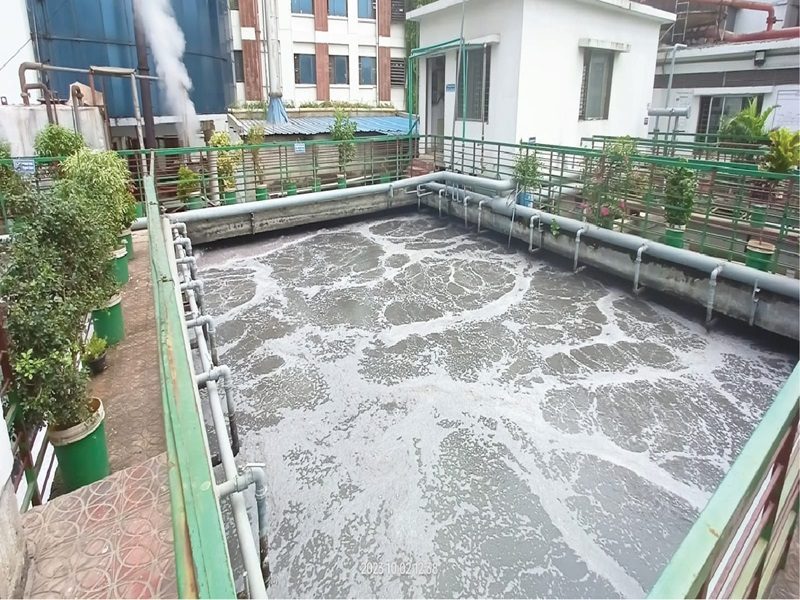
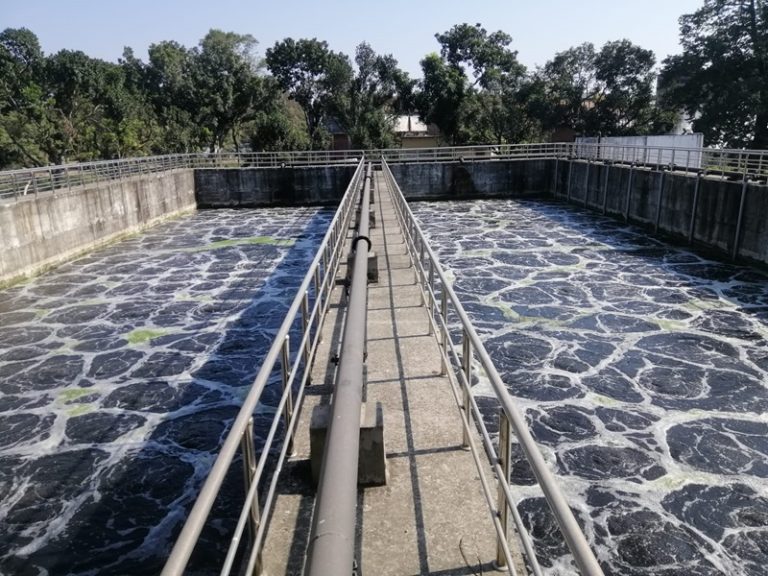
Unlike conventional sewage treatment plants that require separate aeration tanks and secondary clarifiers, an SBR STP Plant performs all major biological treatment processes within a single reactor in a controlled sequence. This innovative approach simplifies plant design while delivering excellent removal of Biochemical Oxygen Demand (BOD), Chemical Oxygen Demand (COD), Total Suspended Solids (TSS), nitrogen, and phosphorus.
Whether you are planning a sewage treatment system for an apartment complex, hospital, hotel, commercial building, industrial facility, or municipal project, understanding SBR STP Plant technology will help you choose an efficient, reliable, and sustainable wastewater treatment solution.
In this comprehensive guide, we will explain everything you need to know about SBR STP Plant, including its working principle, treatment process, components, design considerations, advantages, limitations, applications, operation, maintenance, and why it is one of the preferred sewage treatment technologies for modern infrastructure projects.
What is an SBR STP Plant?
An SBR STP Plant (Sequencing Batch Reactor Sewage Treatment Plant) is a biological wastewater treatment system that treats sewage in timed batches instead of using a continuous flow process. The term Sequencing Batch Reactor (SBR) refers to a treatment reactor where wastewater passes through a series of controlled stages within the same tank. These stages include filling, aeration, biological reaction, settling, treated water decanting, and preparation for the next treatment cycle.
Unlike conventional Activated Sludge Process (ASP) plants that require multiple tanks for different treatment stages, an SBR STP Plant integrates these functions into a single reactor. The result is a more compact, efficient, and easily automated treatment system capable of consistently producing high-quality treated water.
What Does SBR Mean?
SBR stands for Sequencing Batch Reactor.
Let's understand each word:
Sequencing: The treatment follows a programmed sequence of operating steps.
Batch: Wastewater is treated in batches rather than continuously flowing through multiple tanks.
Reactor:The biological treatment takes place inside a specially designed reactor where microorganisms break down organic pollutants. Together, these three concepts create a highly efficient wastewater treatment process that combines aeration, clarification, and biological treatment into one integrated system.
History of SBR Technology
The concept of batch biological treatment has been known for more than a century. Early wastewater treatment systems relied primarily on conventional activated sludge processes, which required separate tanks for aeration and clarification.
As engineering technology advanced, researchers developed methods to combine multiple treatment stages into a single reactor. The introduction of Programmable logic controllers (PLC), automated valves, dissolved oxygen sensors, and intelligent instrumentation transformed SBR technology into a reliable and efficient wastewater treatment solution.Today, SBR systems are used in thousands of wastewater treatment facilities around the world because they provide:
- Consistent treatment performance
- Flexible operation
- Reduced civil construction
- Compact footprint
- Lower operational complexity
- Excellent nutrient removal
Why is an SBR STP Plant Becoming Popular Worldwide?
The increasing demand for sustainable wastewater management has made SBR technology one of the fastest-growing sewage treatment solutions globally. Several factors contribute to its popularity:
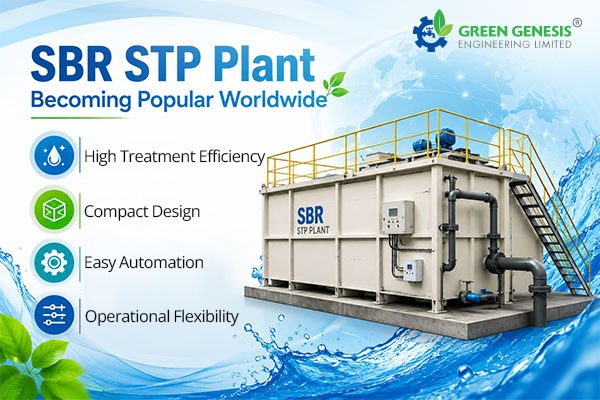
High Treatment Efficiency
SBR technology effectively removes organic pollutants, suspended solids, nitrogen, and phosphorus, producing treated water suitable for discharge or reuse according to applicable standards.
Compact Design
Since multiple treatment functions occur within one reactor, fewer tanks are required compared to many conventional treatment systems. This makes SBR particularly suitable for projects with limited land availability.
Easy Automation
Modern SBR plants are typically controlled using PLC-based automation, allowing treatment cycles to operate with minimal manual intervention while improving consistency and reliability.
Operational Flexibility
Treatment cycle durations can be adjusted to accommodate varying wastewater flow rates and pollution loads, making SBR suitable for facilities with fluctuating wastewater generation.
Water Reuse Potential
Properly treated effluent from an SBR STP Plant can often be reused for:
- Landscape irrigation
- Toilet flushing
- Cooling tower makeup
- Road washing
- Gardening
- Construction activities
- Industrial utility purposes
This supports water conservation and sustainable resource management.
Why Bangladesh Needs SBR STP Plants
Bangladesh is undergoing rapid urban development, resulting in increased wastewater generation from residential, commercial, and industrial sectors. Several factors make SBR technology particularly relevant:
Increasing Urban Population
Cities such as Dhaka, Chattogram, Khulna, Rajshahi, Sylhet, and Cumilla continue to experience significant population growth. Higher population density means greater sewage generation and increased demand for efficient treatment systems.
Growing Real Estate Sector
Modern apartment complexes, mixed-use developments, gated communities, and high-rise buildings require compact sewage treatment systems that can fit within limited project spaces. An SBR STP Plant offers an excellent balance between performance and space efficiency.
Expansion of Healthcare Facilities
Hospitals and medical institutions generate large volumes of domestic wastewater that require reliable biological treatment before discharge.
Hotel and Hospitality Industry
Hotels and resorts require wastewater treatment systems capable of handling variable occupancy while maintaining consistent treatment quality. SBR technology performs well under changing hydraulic loads.
Environmental Regulations
Environmental compliance is becoming increasingly important in Bangladesh. Proper sewage treatment helps organizations reduce pollution, protect natural water bodies, and meet regulatory discharge requirements.
Basic Working Principle of an SBR STP Plant
- Fill
- React (Aeration)
- Settle
- Decant
- Idle
These phases are repeated continuously according to the programmed operating cycle. Because treatment occurs in batches, operators can optimize cycle duration depending on wastewater characteristics, flow rate,and treatment objectives.
Key Characteristics of an SBR STP Plant
An SBR system offers several distinctive features that differentiate it from many other biological treatment technologies.
Single Reactor Operation
Most biological treatment and clarification occur within the same reactor, reducing the need for separate process tanks.
Batch Treatment Process
Wastewater is processed in controlled batches rather than a continuous flow.
PLC-Based Automation
Automated control systems manage valves, blowers, pumps, aeration, decanting, and cycle timing with high precision.
Excellent Effluent Quality
Properly designed systems can achieve excellent removal efficiencies for:
- BOD
- COD
- TSS
- Ammonia
- Total Nitrogen
- Phosphorus
Flexible Cycle Programming
Cycle duration can be modified according to influent flow, wastewater strength, seasonal changes, and operational requirements.
Main Components of an SBR STP Plant
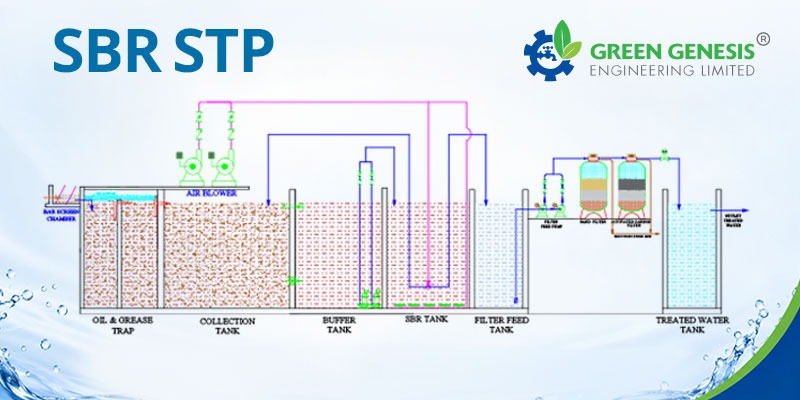
Although the reactor is the heart of the system, several supporting components work together to ensure reliable operation. Typical equipment includes:
- Inlet Screening Chamber
- Collection Tank
- Equalization Tank
- Transfer Pumps
- SBR Reactor Tank
- Fine Bubble Diffuser System
- Air Blowers
- Decanter Mechanism
- Sludge Pumps
- Treated Water Tank
- Disinfection Unit (if required)
- Electrical Control Panel
- PLC Automation System
- Instrumentation and Sensors
- Flow Meter
- Air Distribution Piping
- Valves and Actuators
Each component plays a critical role in maintaining stable treatment performance.
Applications of SBR STP Plants
The versatility of SBR technology makes it suitable for a wide range of wastewater treatment applications. Common sectors include:
- Residential Apartments: Treatment of domestic sewage generated by residents.
- Housing Projects: Centralized sewage treatment for residential communities and townships.
- Hotels & Resorts: Reliable treatment despite fluctuating occupancy levels.
- Hospitals: Treatment of domestic wastewater before discharge or further treatment.
- Educational Institutions: Schools, colleges, universities, and hostels.
- Shopping Malls: Management of wastewater generated by visitors, restaurants, and service facilities.
- Office Buildings: Efficient treatment of domestic sewage from commercial complexes.
- Factories: Treatment of domestic sewage and suitable biodegradable wastewater streams.
- Airports & Railway Stations: Handling wastewater from large public facilities with varying daily loads.
- Municipal Sewage Treatment Plants: SBR technology is widely adopted for municipal sewage treatment because of its operational flexibility and compact design.
Advantages of SBR STP Plant
The growing popularity of SBR STP Plant technology is due to its combination of engineering simplicity and high treatment efficiency. Some major advantages include:
- Excellent BOD removal efficiency
- High COD reduction
- Effective nitrogen removal
- Phosphorus reduction capability
- Compact plant layout
- Reduced land requirement
- Lower civil construction compared to many conventional systems
- Simplified process flow
- Easy PLC automation
- Stable performance under variable loads
- Reduced sludge production
- Improved treated water quality
- Suitable for water reuse applications
- Lower operator intervention
- High operational flexibility
- Long service life with proper maintenance
How Does an SBR STP Plant Work?
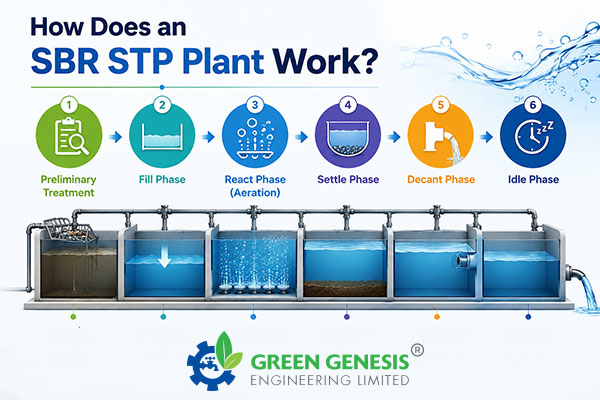
The SBR STP Plant operates differently from conventional sewage treatment systems. Instead of allowing wastewater to flow continuously through several treatment tanks, all major biological treatment processes occur inside a single reactor in a carefully programmed sequence. This batch-wise operation enables better process control, efficient pollutant removal, and a compact plant layout. A complete treatment cycle typically consists of five main phases:
- Preliminary Treatment
- Fill Phase
- React Phase (Aeration)
- Settle Phase
- Decant Phase
- Idle Phase
Depending on the design, each cycle may take 4 to 8 hours, and multiple cycles are completed each day to handle the required wastewater volume.
Step 1: Preliminary Treatment
Before wastewater enters the SBR reactor, it passes through preliminary treatment units. The purpose of this stage is to remove large solids, floating materials, grit, and other debris that could damage pumps or interfere with biological treatment. Preliminary treatment improves plant reliability and reduces maintenance requirements.
Screening Chamber
The screening chamber is the first treatment unit of an SBR STP Plant. Its primary functions are:
- Removing plastic bags
- Capturing cloth and rags
- Removing paper waste
- Retaining leaves and organic debris
- Preventing pump blockage
- Protecting downstream equipment
Depending on the project, either coarse screens or fine screens may be installed.
Benefits of Proper Screening
- Reduced maintenance
- Longer pump life
- Improved plant efficiency
- Lower operating costs
- Reduced equipment failure
Grit Removal (Optional)
For municipal or large commercial projects, a grit chamber may be installed after screening.It removes:
- Sand
- Small stones
- Gravel
- Broken glass
- Heavy inorganic particles
Removing grit protects pumps, pipelines, and valves from excessive wear.
Equalization Tank
The equalization tank plays a vital role in stabilizing wastewater flow before it enters the SBR reactor. Throughout the day, sewage generation varies significantly. Peak flows often occur during the morning, lunch, and evening, while nighttime flow is much lower. The equalization tank helps by:
- Balancing flow variations
- Reducing hydraulic shock
- Mixing incoming wastewater
- Preventing sudden load changes
- Providing consistent feed to the SBR reactor
Many equalization tanks include coarse bubble aeration or mixers to prevent solids from settling and to minimize odor formation.
Step 2: Fill Phase
The Fill Phase is the first operational stage inside the SBR reactor. During this stage, wastewater from the equalization tank is transferred into the reactor. Unlike conventional systems, wastewater is not treated continuously. Instead, a predetermined volume is introduced into the reactor for each treatment cycle.
What Happens During Filling?
- Wastewater enters the reactor.
- Activated sludge already present in the reactor mixes with incoming sewage.
- Microorganisms immediately begin consuming organic pollutants.
- Depending on the design, aeration may be:
- Off (Static Fill)
- On (Aerated Fill)
- Intermittent (Mixed Fill)
The chosen fill strategy depends on treatment objectives such as nitrogen removal or process optimization.
Biological Activity During the Fill Phase
One of the unique features of an SBR STP Plant is that biological treatment begins as soon as wastewater enters the reactor. The activated sludge contains billions of naturally occurring microorganisms that feed on organic matter present in sewage. These microorganisms convert pollutants into:
- Carbon dioxide
- Water
- New microbial biomass
- Stable organic compounds
This natural biological process forms the foundation of wastewater treatment.
Step 3: React Phase (Aeration)
The React Phase is the heart of the SBR STP Plant. During this stage, compressed air is supplied through fine bubble diffusers installed at the bottom of the reactor. The air provides dissolved oxygen required by aerobic microorganisms. These microorganisms rapidly consume organic pollutants, reducing:
- Oxygen Demand (BOD)
- Chemical Oxygen Demand (COD)
- Ammonia
- Suspended organic matter
Fine Bubble Diffusers
Modern SBR systems commonly use fine bubble diffusers because they provide:
- High oxygen transfer efficiency
- Uniform air distribution
- Lower energy consumption
- Improved biological performance
- Reduced operating costs
The small air bubbles remain in contact with wastewater longer, allowing more oxygen to dissolve into the liquid.
Air Blowers
Air blowers supply compressed air to the diffuser system. Selecting the correct blower capacity is critical because biological treatment depends on maintaining adequate dissolved oxygen. Common blower types include:
- Roots Blowers
- Rotary Lobe Blowers
- Turbo Blowers
- High-Efficiency Positive Displacement Blowers
Energy-efficient blowers help reduce long-term operating costs.
Biological Oxidation
During aeration, aerobic microorganisms consume biodegradable organic pollutants as a food source. This process is known as biological oxidation. Organic pollutants are converted into:
- Carbon dioxide
- Water
- New microorganisms
- Stable biomass
As a result, wastewater becomes significantly cleaner.
BOD Removal in an SBR STP Plant
Biochemical Oxygen Demand (BOD) measures the amount of oxygen required by microorganisms to break down organic matter. High BOD indicates heavily polluted wastewater. An SBR STP Plant can achieve excellent BOD removal by providing:
- Adequate aeration
- Healthy microbial populations
- Proper retention time
- Effective mixing
Well-designed SBR systems typically produce treated water with significantly reduced BOD levels, helping facilities comply with discharge standards.
COD Removal
Chemical Oxygen Demand (COD) represents the total amount of oxygen required to oxidize organic and certain inorganic substances in wastewater. During the React Phase, microorganisms degrade biodegradable compounds, while process optimization improves overall COD reduction. Effective COD removal contributes to better environmental protection and higher treated water quality.
Nitrification
Domestic sewage contains ammonia released from human waste and decomposing organic materials. High ammonia concentrations can harm aquatic ecosystems if discharged untreated. During the aerobic React Phase,specialized nitrifying bacteria convert:
- Ammonia → Nitrite
- Nitrite → Nitrate
This biological process is called nitrification and is a key feature of modern SBR technology.
Denitrification
After nitrification, nitrogen removal continues through denitrification. During periods of low oxygen or controlled anoxic conditions, denitrifying bacteria convert nitrate into harmless nitrogen gas, which is released naturally into the atmosphere. Effective nitrification and denitrification help reduce nutrient pollution and improve effluent quality.
Phosphorus Removal
Excess phosphorus contributes to algae growth and eutrophication in rivers and lakes. An SBR STP Plant can reduce phosphorus through:
- Enhanced Biological Phosphorus Removal (EBPR)
- Chemical dosing (when required)
The selected method depends on project requirements and discharge regulations.
Step 4: Settle Phase
Once aeration stops, the reactor enters the Settle Phase. During this period:
- Air supply is switched off.
- Mixing stops.
- Activated sludge settles naturally to the bottom of the reactor.
- Clear treated water forms above the sludge blanket.
Unlike conventional activated sludge systems, no separate secondary clarifier is required because settling occurs inside the same reactor. This simplifies plant design and reduces construction costs.
Advantages of the Settle Phase
- Excellent sludge separation
- Clear treated effluent
- Stable operation
- Reduced suspended solids
- No need for separate clarifier
Step 5: Decant Phase
After settling is complete, the clarified treated water is carefully withdrawn from the upper portion of the reactor. This process is known as decanting. A specially designed floating or adjustable decanter removes only the clear supernatant while leaving the settled sludge undisturbed. The treated water may then be:
- Discharged to a drain or receiving water body (subject to local standards)
- Reused for landscape irrigation
- Used for toilet flushing
- Supplied for cooling towers
- Utilized for construction or other non-potable purposes
Decanter System
The decanter is one of the most important components of an SBR STP Plant. Its functions include:
- Collecting treated water
- Preventing sludge carryover
- Maintaining consistent effluent quality
- Operating automatically under PLC control
Proper decanter design directly influences the quality of treated water.
Step 6: Idle Phase
The Idle Phase is the final stage before the next treatment cycle begins. Depending on plant design, this period may be used for:
- Sludge wasting
- Equipment inspection
- Process adjustment
- Preparing for the next fill cycle
In plants with multiple SBR reactors, one reactor may be in the Idle Phase while another is actively treating wastewater, ensuring continuous overall plant operation.
Sludge Wasting
As microorganisms grow and reproduce, excess biological sludge accumulates in the reactor. A controlled quantity of sludge is periodically removed to maintain the desired biomass concentration. Proper sludge management helps:
- Maintain treatment efficiency
- Prevent sludge bulking
- Improve settling characteristics
- Ensure stable biological performance
The wasted sludge can be further treated through thickening, dewatering, composting, or other approved disposal methods.
Disinfection (Optional Final Treatment)
Depending on project requirements and discharge standards, treated water may undergo a final disinfection stage. Common methods include:
- Chlorination
- Ultraviolet (UV) disinfection
- Ozone treatment
Disinfection further reduces pathogenic microorganisms, especially when treated water is intended for reuse.
Typical Treatment Performance of an SBR STP Plant
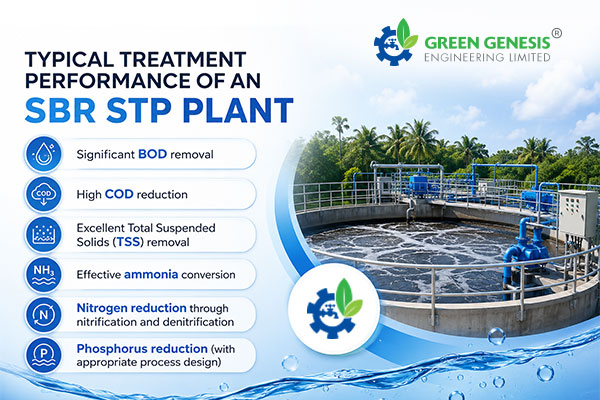
A properly designed and operated SBR STP Plant is capable of achieving excellent treatment performance for domestic sewage. Typical reductions include:
- Significant BOD removal
- High COD reduction
- Excellent Total Suspended Solids (TSS) removal
- Effective ammonia conversion
- Nitrogen reduction through nitrification and denitrification
- Phosphorus reduction (with appropriate process design)
Actual performance depends on influent characteristics, design criteria, operation, and maintenance.
Factors Affecting the Cost of an SBR STP Plant
One of the most common questions from project owners is, "How much does an SBR STP Plant cost?" The answer depends on several engineering, operational, and project-specific factors. Instead of focusing only on the initial purchase price, it is important to evaluate the total life-cycle cost, including construction, operation, maintenance, and energy consumption.
1. Plant Capacity
The treatment capacity is one of the biggest factors affecting the overall cost. Larger plants require:
- Bigger reactor tanks
- Higher-capacity blowers
- Larger pumps
- More diffusers
- Larger electrical panels
- Additional automation
Capacity is commonly expressed in KLD (Kilo Liters per Day) or m³/day.
2. Wastewater Characteristics
The design of an SBR STP Plant depends heavily on the quality of incoming wastewater. Parameters such as BOD, COD, TSS, oil and grease, ammonia, and pH influence reactor sizing, aeration requirements, and treatment cycles. Wastewater with higher organic loads generally requires larger biological treatment capacity.
3. Civil Construction Requirements
The cost of civil works depends on:
- Underground or above-ground construction
- Soil conditions
- Groundwater level
- Foundation requirements
- Reinforced concrete quantities
Proper structural design is essential for long-term reliability.
4. Equipment Quality
The quality of mechanical and electrical components has a direct impact on plant performance and operating life. Key equipment includes:
- Air blowers
- Fine bubble diffusers
- Decanter system
- Pumps
- Valves
- Flow meters
- Sensors
- Electrical control panel
- PLC automation
Choosing high-quality components can reduce maintenance costs and improve long-term reliability.
5. Automation Level
Modern SBR STP Plants may include:
- PLC-based operation
- Human Machine Interface (HMI)
- SCADA monitoring
- Remote monitoring
- GSM alarm system
- Online water quality monitoring
- Automatic sludge control
Advanced automation increases convenience and process consistency but also affects the project cost.
Operation and Maintenance of an SBR STP Plant
A properly designed SBR STP Plant requires regular operation and maintenance to achieve stable treatment performance. Preventive maintenance helps minimize downtime, extend equipment life, and ensure compliance with discharge standards.
Daily Checks
Operators should:
- Inspect blower operation
- Check reactor water level
- Observe aeration performance
- Monitor pump operation
- Inspect for leaks
- Verify valve operation
- Review PLC alarms
Weekly Maintenance
Recommended tasks include:
- Cleaning screens
- Inspecting diffusers
- Checking decanter movement
- Lubricating equipment where required
- Verifying dissolved oxygen levels
- Removing accumulated debris
Monthly Maintenance
Monthly activities may include:
- Calibration of sensors
- Electrical panel inspection
- Flow meter verification
- Sludge level assessment
- Blower belt inspection (where applicable)
- Tightening electrical connections
Annual Maintenance
Annual servicing often includes:
- Complete blower inspection
- Diffuser cleaning or replacement (if necessary)
- Pump servicing
- Valve inspection
- PLC software backup
- Structural inspection of tanks
- Instrument calibration
A preventive maintenance schedule helps reduce the risk of unexpected breakdowns.
Common Operational Challenges and Solutions
Even a well-designed SBR STP Plant may occasionally experience operational issues. Early identification and corrective action help maintain treatment efficiency.
| Challenge | Possible Cause | Typical Solution |
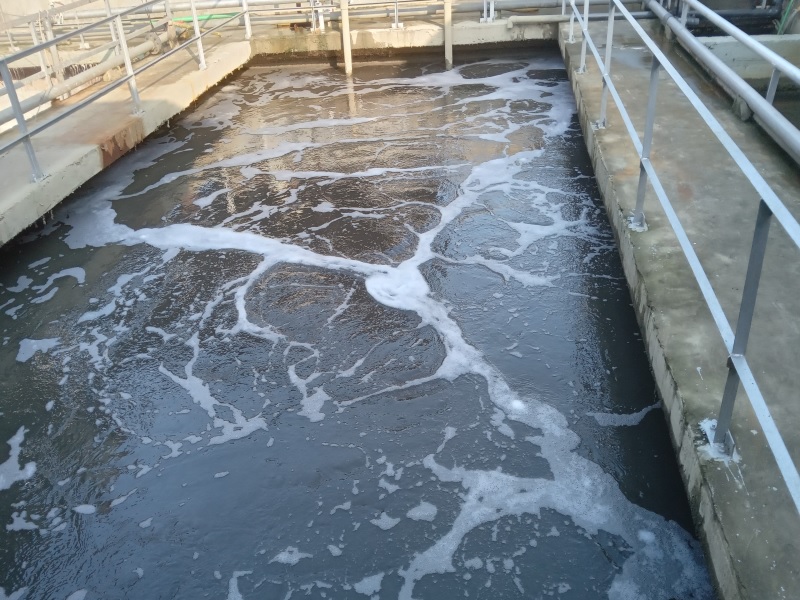
| Foaming | High organic loading or filamentous bacteria | Review loading, adjust aeration, inspect sludge age |
| Poor settling | Sludge bulking | Optimize biological conditions and sludge wasting |
| High BOD in treated water | Insufficient aeration or overload | Increase aeration, review cycle times |
| High ammonia | Incomplete nitrification | Improve dissolved oxygen and retention time |
| Low dissolved oxygen | Blower or diffuser issue | Inspect blowers and clean diffusers |
| Sludge carryover | Improper decanting | Check decanter operation and settling time |
Typical Applications of an SBR STP Plant
The flexibility of SBR technology makes it suitable for a wide range of sectors.
Residential Apartments
Apartment buildings generate domestic sewage from kitchens, bathrooms, and laundry facilities. An SBR STP Plant provides efficient treatment while occupying relatively little space.
Housing Projects
Large residential communities often require centralized sewage treatment. SBR technology is well suited for handling variable daily wastewater flow.
Hotels and Resorts
Hotels experience fluctuating occupancy levels throughout the year. The programmable nature of SBR allows treatment cycles to adapt to changing wastewater loads.
Hospitals
Hospitals produce significant volumes of domestic wastewater. SBR technology offers effective biological treatment before discharge or additional specialized treatment where required.
Commercial Buildings
Office towers, shopping malls, and business centers benefit from compact SBR systems that are easy to automate and maintain.
Educational Institutions
Schools, colleges, universities, and hostels can use SBR STP Plants to manage domestic wastewater while supporting environmental sustainability initiatives.
Industrial Facilities
Many industries install SBR systems for domestic sewage and selected biodegradable industrial wastewater streams, depending on wastewater characteristics and applicable regulations.
Municipal Sewage Treatment
Municipal authorities increasingly adopt SBR technology due to its:
- High treatment efficiency
- Flexible operation
- Compact footprint
- Ability to accommodate varying flow rates
Benefits of Reusing Treated Water
One of the major advantages of an SBR STP Plant is the opportunity to reuse treated water for non-potable applications, subject to local regulations and treatment quality. Common reuse applications include:
- Landscape irrigation
- Gardening
- Toilet flushing
- Cooling tower makeup
- Road washing
- Vehicle washing
- Construction activities
- Dust suppression
Water reuse reduces dependence on freshwater resources and supports sustainable development.
Why Choose Green Genesis Engineering Limited?
Selecting the right technology is only part of a successful sewage treatment project. Choosing an experienced engineering partner is equally important. At Green Genesis Engineering Limited , we are committed to delivering reliable, efficient, and customized wastewater treatment solutions that meet the needs of residential, commercial, industrial, and municipal clients across Bangladesh.
Comprehensive Engineering Services
We provide end-to-end support, including:
- Technical consultation
- Site assessment
- Process selection
- System design
- Equipment supply
- Installation supervision
- Commissioning
- Operator training
- After-sales service
Customized SBR Solutions
Every wastewater treatment project is unique. Our engineering team designs SBR STP Plants based on:
- Wastewater characteristics
- Treatment capacity
- Available land
- Project budget
- Future expansion plans
- Regulatory requirements
Quality Equipment
We prioritize reliable equipment sourced from reputable manufacturers to enhance performance, durability, and ease of maintenance.
Professional Project Management
From concept to commissioning, our team focuses on quality, timely execution, and long-term customer satisfaction.
Reliable After-Sales Support
Our support services include:
- Preventive maintenance
- Technical assistance
- Spare parts support
- Performance optimization
- Operational guidance
Frequently Asked Questions (FAQs)
1. What is an SBR STP Plant?
An SBR STP Plant is a sewage treatment system that uses the Sequencing Batch Reactor process to biologically treat wastewater in timed batches.
2. What does SBR stand for?
SBR stands for Sequencing Batch Reactor.
3. How is SBR different from the Activated Sludge Process?
Unlike conventional Activated Sludge Process (ASP) systems, SBR performs aeration and settling in the same reactor rather than using separate tanks.
4. Is an SBR STP Plant suitable for apartments?
Yes. SBR technology is widely used in apartment complexes because it combines high treatment efficiency with a compact footprint.
5. Can treated water be reused?
Yes. Depending on treatment quality and local regulations, treated water may be reused for irrigation, toilet flushing, gardening, cooling systems, and other non-potable applications.
6. Is SBR suitable for hotels and hospitals?
Yes. SBR technology is suitable for facilities with varying wastewater generation, including hotels, hospitals, and commercial buildings.
7. Does an SBR STP Plant require continuous operator supervision?
Modern SBR systems use PLC-based automation, reducing manual intervention. However, regular inspection and maintenance remain important.
8. What is the typical life of an SBR STP Plant?
With proper design, quality equipment, and regular maintenance, an SBR STP Plant can provide reliable service for many years.
9. What are the main pollutants removed by an SBR STP Plant?
An SBR STP Plant is designed to reduce organic matter (BOD and COD), suspended solids (TSS), and nutrients such as nitrogen and phosphorus through biological treatment processes.
10. Is SBR suitable for Bangladesh?
Yes. Its compact design, high treatment efficiency, flexibility, and adaptability make SBR technology well suited for residential, commercial, industrial, and municipal wastewater treatment projects in Bangladesh.
Final Thoughts
An SBR STP Plant is one of the most advanced and reliable biological sewage treatment technologies available today. By integrating filling, aeration, biological treatment, settling, and decanting into a single reactor, it delivers high-quality treated effluent while minimizing land requirements and simplifying plant operation.
Its flexibility, automation capability, and strong treatment performance make it an excellent choice for apartments, hotels, hospitals, commercial buildings, educational institutions, industrial facilities, and municipal sewage treatment projects. When designed and operated correctly, an SBR STP Plant not only helps organizations meet environmental requirements but also supports water conservation through treated water reuse.
Partner with Green Genesis Engineering Limited
If you are planning a new sewage treatment facility or upgrading an existing one, Green Genesis Engineering Limited offers professional engineering expertise and customized SBR STP Plant solutions tailored to your project's specific needs. Our experienced team is committed to delivering:
- Customized SBR STP Plant design
- High-quality equipment
- Professional installation and commissioning
- Reliable operation and maintenance support
- Sustainable wastewater treatment solutions
- Responsive technical assistance
Whether your project involves a residential development, commercial complex, healthcare facility, industrial site, or municipal infrastructure, we are ready to help you implement an efficient and dependable wastewater treatment system.