Introduction
Wastewater treatment has become one of the most important environmental responsibilities for industries, commercial establishments, institutions, hospitals, hotels, residential complexes, and municipalities. As urbanization and industrialization continue to grow, the demand for reliable, energy-efficient, and environmentally sustainable sewage treatment technologies has increased significantly. Among the modern biological wastewater treatment technologies available today, MBBR STP (Moving Bed Biofilm Reactor Sewage Treatment Plant) has emerged as one of the most efficient and dependable solutions for treating domestic and industrial wastewater. Green Genesis Engineering Limited is a trusted engineering company in Bangladesh specializing in the design, engineering, manufacturing, installation, commissioning, and maintenance of high-performance MBBR STP systems . Our solutions are designed to deliver superior treatment efficiency while minimizing operational costs, energy consumption, and maintenance requirements. Every project is engineered to comply with environmental regulations and to provide long-term, reliable performance. Whether you require a compact sewage treatment plant for a commercial building or a large-capacity wastewater treatment system for an industrial facility, our customized MBBR technology provides an ideal balance between treatment performance, operational simplicity, and cost-effectiveness.
What is MBBR STP?
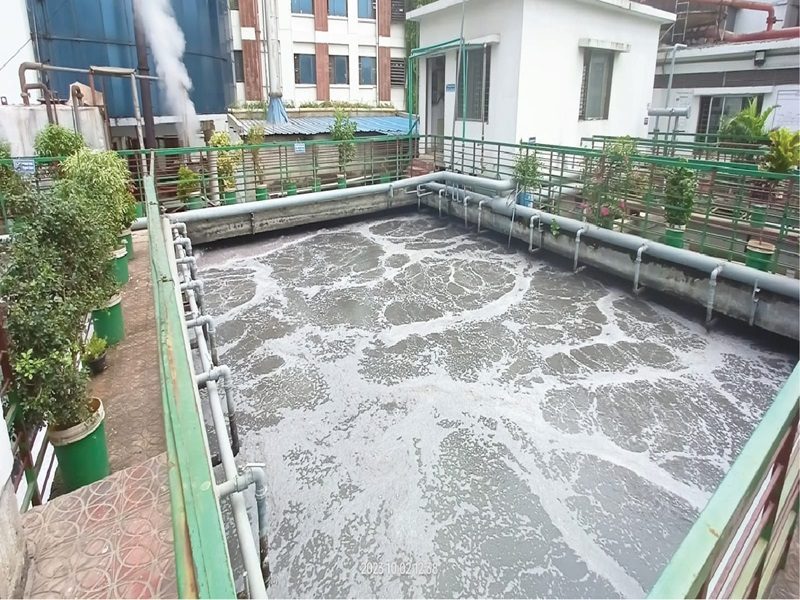
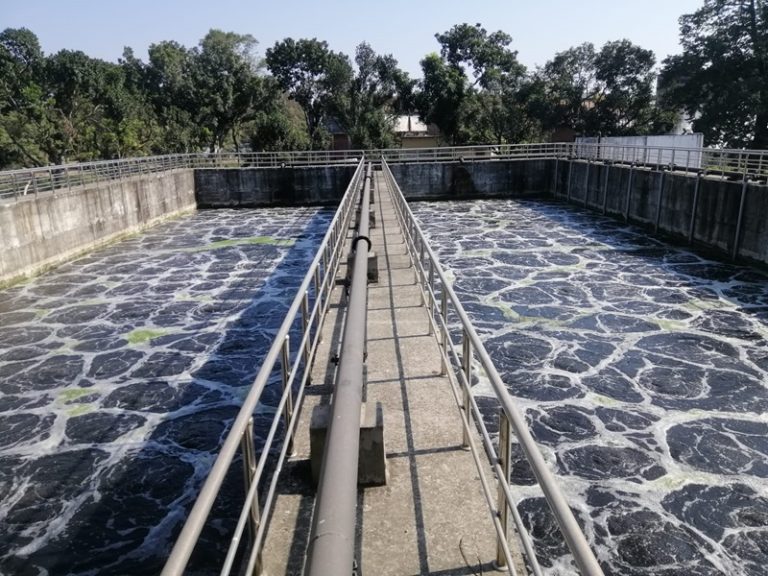
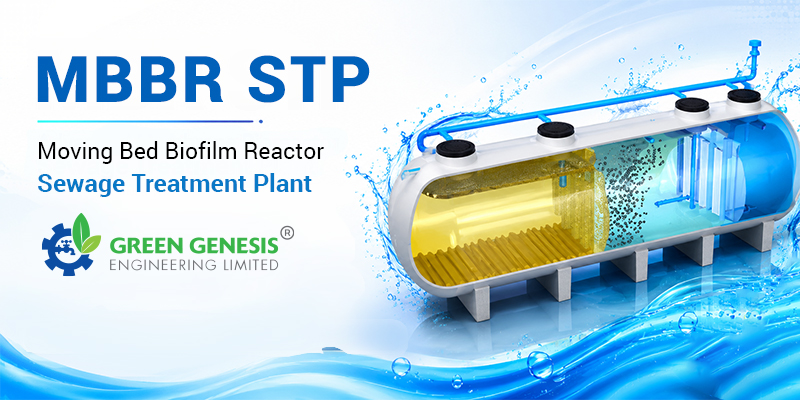
MBBR STP (Moving Bed Biofilm Reactor Sewage Treatment Plant) is an advanced biological wastewater treatment system that uses specially designed floating plastic media inside aeration tanks. These biofilm carriers provide a large protected surface where naturally occurring microorganisms attach and grow. The microorganisms form a stable biofilm that consumes organic pollutants, nitrogen compounds, and biodegradable contaminants present in sewage. Unlike conventional activated sludge systems, where microorganisms remain suspended in water, the MBBR process allows bacteria to grow on thousands of moving carrier elements continuously circulating within the reactor. This innovative design significantly increases the biological treatment capacity without increasing the reactor size. The continuous movement of the biofilm carriers, supported by aeration, ensures excellent oxygen transfer, uniform mixing, and efficient contact between wastewater and microorganisms. As a result, MBBR systems achieve high treatment efficiency while maintaining stable performance under varying hydraulic and organic loading conditions. The technology is suitable for both new wastewater treatment plants and the upgrading of existing sewage treatment facilities where higher treatment capacity is required without major civil modifications.
Understanding the MBBR Technology
The Moving Bed Biofilm Reactor process combines the advantages of attached-growth and suspended-growth biological treatment systems into a single, highly efficient treatment process. Inside the biological reactor, thousands of specially engineered polyethylene carriers float freely in the wastewater. These carriers possess a high protected surface area specifically designed for microbial attachment. As wastewater enters the reactor, microorganisms attached to the carriers begin degrading dissolved organic matter. Air supplied through fine bubble diffusers keeps the media continuously moving inside the reactor. This movement prevents clogging, improves oxygen transfer efficiency, and ensures that every carrier receives uniform exposure to nutrients and oxygen. The microorganisms naturally multiply and create a mature biofilm over the media surface. During operation, excess biomass is gently removed through natural shear forces while healthy biofilm continues to grow. This self-regulating mechanism allows the biological reactor to maintain consistent treatment performance over long operating periods. Because the microorganisms remain attached to the media instead of depending solely on suspended sludge, the system becomes more resistant to hydraulic shock loads, toxic fluctuations, and sudden variations in wastewater characteristics.
How Does an MBBR STP Work?
An MBBR Sewage Treatment Plant follows a carefully engineered treatment sequence that ensures efficient removal of suspended solids, biodegradable organic matter, nutrients, and harmful contaminants.
Collection of WastewaterDomestic or industrial wastewater is collected through the drainage network and directed to the treatment plant. The incoming wastewater may contain suspended solids, organic pollutants, grease, detergents, nutrients, and microorganisms.
Screening ProcessThe wastewater first passes through coarse and fine screens where large debris, plastics, cloth, paper, wood pieces, and other floating materials are removed. This protects downstream pumps and equipment from damage.
Equalization TankThe equalization tank balances fluctuations in wastewater flow and pollutant concentration throughout the day. Continuous mixing prevents sedimentation and provides a stable hydraulic load to the biological treatment process.
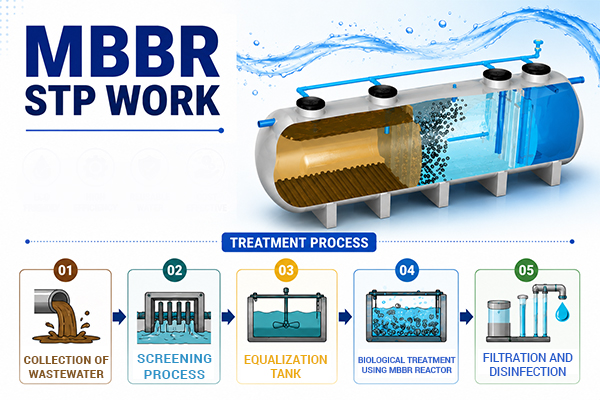
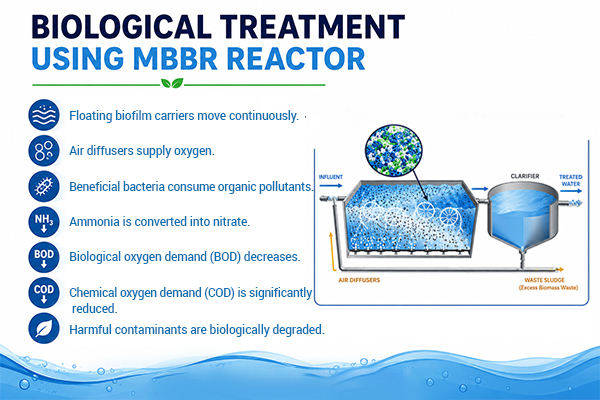
The heart of the treatment plant is the MBBR reactor. Inside this reactor:
- Floating biofilm carriers move continuously.
- Air diffusers supply oxygen.
- Beneficial bacteria consume organic pollutants.
- Ammonia is converted into nitrate.
- Biological oxygen demand (BOD) decreases.
- Chemical oxygen demand (COD) is significantly reduced.
- Harmful contaminants are biologically degraded.
The reactor provides an ideal environment for biological purification while requiring relatively little operator intervention.
After biological treatment, water flows into the settling tank where detached biomass and suspended solids settle to the bottom. The clarified water moves to the next treatment stage, while settled sludge is returned or removed for further sludge management.
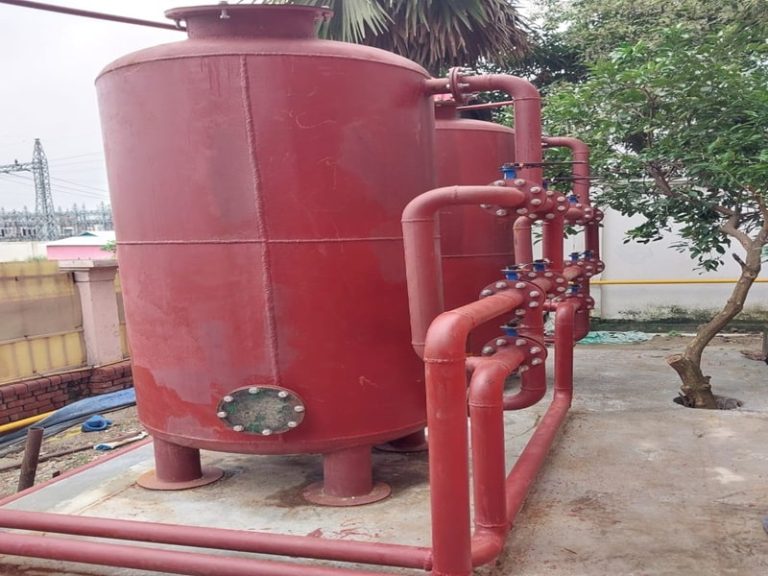
Filtration and DisinfectionDepending on project requirements, treated water may pass through pressure sand filters, activated carbon filters, or advanced filtration systems before final disinfection using chlorine, sodium hypochlorite, or ultraviolet (UV) systems. The disinfected water becomes suitable for discharge or reuse according to local environmental standards.
Major Components of an MBBR STP
A professionally designed MBBR STP consists of several integrated treatment units that work together to ensure efficient wastewater purification.
Inlet Chamber: Receives incoming sewage and distributes flow evenly throughout the treatment process.
Bar Screen: Removes large solid materials that could damage mechanical equipment.
Equalization Tank: Balances hydraulic flow and pollutant concentration to maintain stable plant performance.
Air Blower System: Provides the oxygen required for aerobic microorganisms while simultaneously keeping the carrier media in continuous motion.
MBBR Reactor Tank: Contains specially engineered floating biofilm media where biological treatment takes place.
Fine Bubble Diffusers: Distribute air uniformly throughout the reactor, maximizing oxygen transfer efficiency and improving biological activity.
Secondary Clarifier: Separates biological sludge from treated wastewater through gravity settling.
Sludge Holding Tank: Stores excess biological sludge before dewatering or disposal.
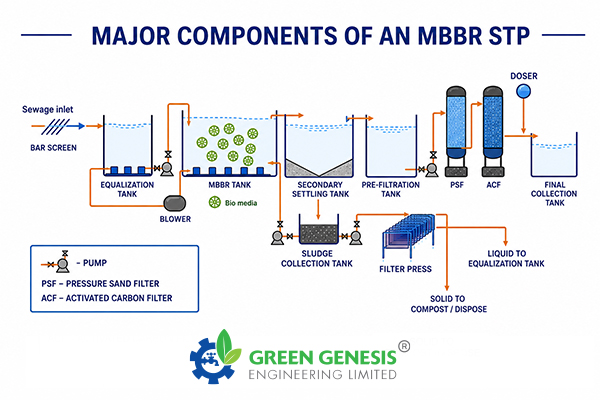
Filter System: Improves treated water clarity by removing remaining suspended particles.
Disinfection Unit: Destroys harmful bacteria and pathogens before water discharge or reuse.
Control Panel: Provides automated monitoring and control of blowers, pumps, valves, and instrumentation for reliable plant operation.
Key Advantages of MBBR STP
The growing popularity of MBBR STP technology is driven by its outstanding operational and environmental benefits.
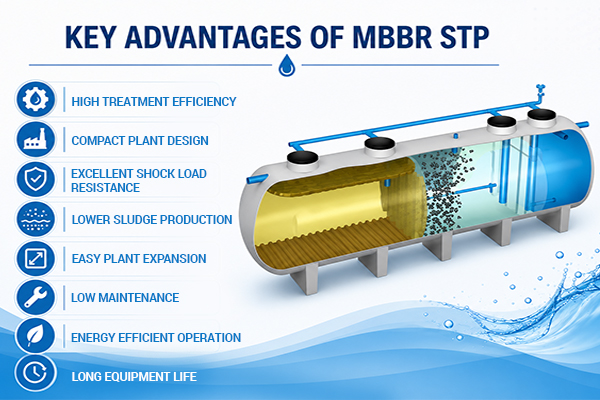
High Treatment Efficiency
The large surface area provided by biofilm carriers supports a dense microbial population, enabling efficient removal of organic pollutants and nutrients even under fluctuating operating conditions.
Compact Plant Design
Because of its high biological activity, an MBBR STP requires a smaller footprint compared to many conventional treatment systems, making it ideal for locations with limited installation space.
Excellent Shock Load Resistance
The attached biofilm protects microorganisms from sudden changes in wastewater characteristics, allowing stable performance even during hydraulic or organic load fluctuations.
Lower Sludge Production
Compared with many traditional biological treatment methods, the MBBR process generally produces less excess sludge, reducing sludge handling and disposal requirements.
Easy Plant Expansion
Future increases in treatment capacity can often be achieved by adding additional carrier media or expanding reactor volume without completely redesigning the treatment plant.
Low Maintenance
The absence of sludge recycling in many MBBR configurations reduces operational complexity and maintenance requirements, making the system easier to manage.
Energy Efficient Operation
Modern blower systems, optimized aeration design, and efficient biological processes contribute to lower overall energy consumption.
Long Equipment Life
Properly designed MBBR systems use corrosion-resistant materials, durable carrier media, and high-quality mechanical equipment, ensuring reliable long-term operation.
Complete MBBR STP Treatment Process
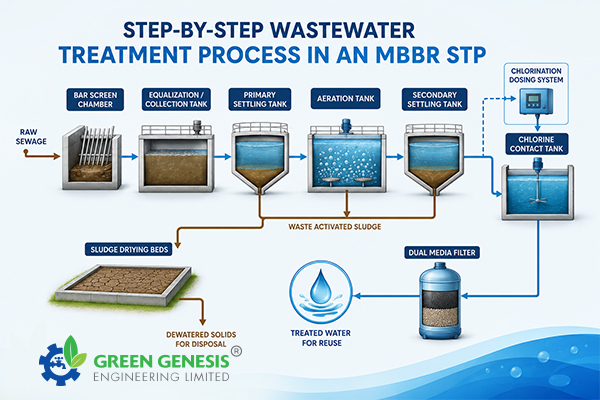
A well-designed MBBR STP (Moving Bed Biofilm Reactor Sewage Treatment Plant) follows a sequence of physical, biological, and chemical treatment processes to transform contaminated wastewater into treated water that complies with environmental discharge or reuse standards. Each treatment stage plays a critical role in removing different types of pollutants while ensuring consistent and reliable plant performance. At Green Genesis Engineering Limited, every MBBR STP is engineered to achieve maximum treatment efficiency, operational stability, and long-term reliability. Our systems are designed based on wastewater characteristics, hydraulic loading, effluent quality requirements, and future expansion needs, ensuring that each project delivers sustainable performance for years to come.
Step-by-Step Wastewater Treatment Process in an MBBR STP
1. Wastewater Collection
The treatment process begins when wastewater generated from residential buildings, commercial facilities, hotels, hospitals, factories, educational institutions, or industrial operations is collected through a drainage network. The incoming sewage may contain:
- Organic matter
- Suspended solids
- Food waste
- Grease and oil
- Detergents
- Human waste
- Pathogenic microorganisms
- Nitrogen compounds
- Phosphorus
- Various biodegradable pollutants
The collected wastewater is directed toward the inlet chamber of the sewage treatment plant for preliminary treatment.
2. Preliminary Screening
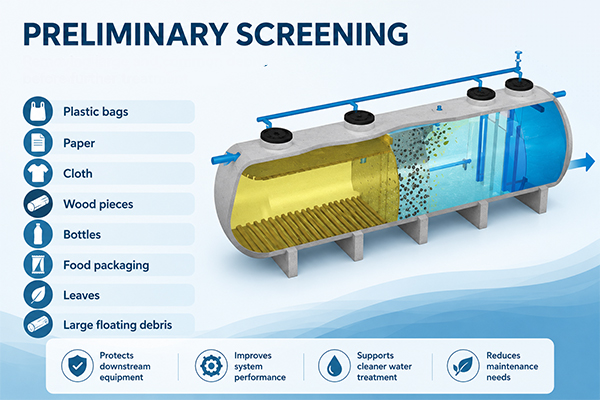
Before biological treatment begins, the wastewater passes through coarse and fine screening systems. The screening unit removes unwanted materials such as:
- Plastic bags
- Paper
- Cloth
- Wood pieces
- Bottles
- Food packaging
- Leaves
- Large floating debris
Removing these materials protects pumps, pipelines, valves, blowers, and other mechanical equipment from blockage and damage.
3. Grit Removal (Optional)
For industrial or municipal applications, a grit chamber may be installed to remove heavy inorganic particles including:
- Sand
- Gravel
- Stone particles
- Broken glass
- Soil
- Metal fragments
Eliminating abrasive materials helps extend equipment life and minimizes wear on pumps and pipelines.
4. Equalization Tank
Wastewater flow rarely remains constant throughout the day. Residential complexes experience peak usage during mornings and evenings, while industrial facilities often generate variable wastewater depending on production schedules. The equalization tank performs several important functions:
- Stabilizes wastewater flow
- Balances pollutant concentration
- Prevents hydraulic shock loading
- Ensures continuous plant operation
- Improves biological treatment efficiency
Air mixing systems or mechanical mixers prevent sedimentation while maintaining uniform wastewater characteristics.
5. Biological Treatment in the MBBR Reactor
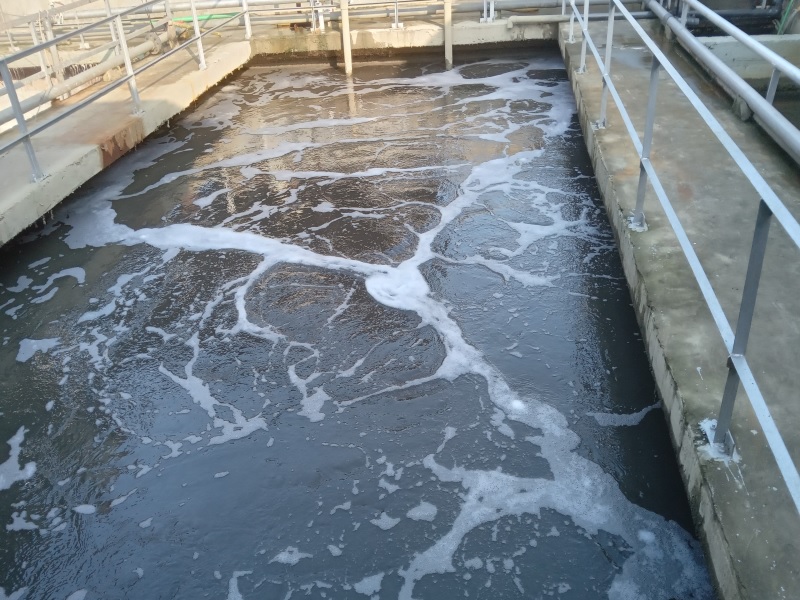
The biological reactor is the heart of an MBBR STP. Thousands of specially designed polyethylene carrier media continuously move throughout the aeration tank. Each carrier provides an exceptionally large protected surface area where microorganisms naturally attach and form biofilm colonies.As wastewater flows through the reactor:
- Organic pollutants diffuse into the biofilm.
- Aerobic microorganisms consume biodegradable contaminants.
- Harmful organic compounds are converted into carbon dioxide, water, and new microbial cells.
- Ammonia is oxidized into nitrite and nitrate through the nitrification process.
- Biological Oxygen Demand (BOD) is significantly reduced.
- Chemical Oxygen Demand (COD) decreases substantially.
- Dissolved pollutants are biologically decomposed.
Unlike conventional activated sludge systems, the microorganisms remain attached to the carrier media instead of floating freely in the wastewater. This attached-growth mechanism creates a more stable biological ecosystem capable of handling fluctuations in wastewater quality.
6. Aeration System
Efficient oxygen transfer is essential for biological treatment. High-quality air blowers continuously supply oxygen through fine bubble diffusers located at the bottom of the reactor. The aeration system performs three simultaneous functions:
- Supplies oxygen required for aerobic bacteria.
- Keeps carrier media in constant movement.
- Provides complete mixing throughout the reactor.
Proper aeration maximizes biological activity while minimizing energy consumption.
7. Secondary Clarification
After biological treatment, the mixed liquor enters the secondary clarifier. Here, gravity separates suspended biomass from the treated water. Inside the clarifier:
- Biological sludge settles at the bottom.
- Clear treated water flows over the outlet weirs.
- Excess sludge is transferred to the sludge holding tank.
- Clarified water proceeds for polishing treatment.
The clarification process improves water clarity and reduces suspended solids before final filtration.
8. Filtration
Depending on project requirements, treated water may undergo additional filtration to achieve higher water quality. Common filtration systems include:
Pressure Sand Filter
Removes fine suspended solids and improves water clarity.
Activated Carbon Filter
Removes:
- Residual color
- Odor
- Organic compounds
- Trace contaminants
- Chlorine residues
Provides superior particle removal using multiple filtration layers.
9. Disinfection
Although biological treatment removes most harmful microorganisms, final disinfection ensures safe discharge or reuse. Common disinfection methods include:
- Chlorination
- Sodium hypochlorite dosing
- Ultraviolet (UV) disinfection
- Ozone treatment
Disinfection significantly reduces pathogenic bacteria, viruses, and disease-causing microorganisms.
10. Treated Water Reuse or Discharge
Depending on local environmental regulations and project objectives, treated water may be:
- Discharged into rivers
- Released into drainage systems
- Used for landscape irrigation
- Utilized for toilet flushing
- Applied in cooling towers
- Used for industrial cleaning
- Recycled for non-potable applications
Water reuse contributes to sustainable water resource management while reducing freshwater consumption.
Where Can MBBR STP Be Used?
One of the greatest strengths of MBBR STP technology is its versatility. It can be successfully implemented across a wide range of industries and facilities.
Residential Buildings
Large apartment complexes generate significant volumes of domestic sewage. MBBR STPs efficiently treat this wastewater while occupying minimal installation space. Applications include:
- Apartment complexes
- Housing societies
- Residential townships
- Condominium projects
- Staff accommodation
Commercial Buildings
Commercial facilities require reliable wastewater treatment systems that operate continuously with minimal maintenance. Typical installations include:
- Office buildings
- Shopping malls
- Business centers
- Exhibition halls
- Convention centers
Hotels and Resorts
Hotels produce wastewater containing organic matter, detergents, food waste, and laundry discharge. MBBR technology provides consistent treatment while allowing treated water reuse for landscaping and flushing applications.
Hospitals
Hospital wastewater contains biological contaminants that require advanced treatment before discharge. An MBBR STP effectively reduces organic pollutants and prepares wastewater for proper disinfection.
Educational Institutions
Schools, colleges, universities, and training centers benefit from compact sewage treatment plants that require limited operator attention.
Food Processing Industries
Food manufacturing generates wastewater rich in biodegradable organic matter. Applications include:
- Beverage factories
- Dairy plants
- Meat processing plants
- Seafood processing plants
- Bakery industries
- Vegetable processing
- Fruit processing
Textile Industry
Textile wastewater often contains dyes, suspended solids, detergents, and organic pollutants. MBBR systems can serve as an effective biological treatment stage within comprehensive wastewater treatment plants.
Pharmaceutical Industry
Pharmaceutical facilities require stable biological treatment systems capable of handling variable wastewater characteristics.
Chemical Industries
Properly designed MBBR reactors help reduce biodegradable contaminants before advanced treatment processes.
Industrial Parks
Centralized wastewater treatment facilities frequently use MBBR technology due to its operational flexibility and compact footprint.
Municipal Sewage Treatment Plants
Cities and municipalities increasingly adopt MBBR technology to upgrade existing sewage treatment plants without requiring extensive additional land.
Design Considerations for an MBBR STP
Every wastewater treatment project has unique operating conditions. Proper engineering design is essential to achieve consistent treatment performance. At Green Genesis Engineering Limited, several critical parameters are carefully evaluated before designing an MBBR STP.
Wastewater Flow Rate
Daily average flow and peak flow determine reactor sizing, hydraulic retention time, and equipment capacity.
Wastewater Characteristics
Laboratory analysis typically includes:
- BOD
- COD
- Total Suspended Solids (TSS)
- Oil & Grease
- Ammonia
- Total Nitrogen
- Phosphorus
- pH
- Temperature
These parameters influence the biological reactor design and media loading.
Organic Loading Rate
The amount of biodegradable organic matter entering the reactor directly affects biofilm growth and treatment efficiency.
Hydraulic Retention Time (HRT)
Adequate retention time ensures sufficient contact between wastewater and microorganisms for effective biological degradation.
Biofilm Carrier Filling Ratio
Carrier media usually occupy a portion of the reactor volume. The selected filling ratio depends on:
- Treatment objectives
- Influent characteristics
- Reactor configuration
- Required effluent quality
Aeration Requirements
Proper blower capacity and diffuser layout ensure:
- Adequate dissolved oxygen
- Uniform media movement
- High oxygen transfer efficiency
- Reduced energy consumption
Future Expansion
A well-designed MBBR STP should accommodate future increases in wastewater flow by allowing additional media installation or modular expansion.
MBBR STP vs Conventional Activated Sludge Process (ASP)
| Feature | MBBR STP | Conventional ASP |
|---|---|---|
| Biological Growth | Attached biofilm | Suspended sludge |
| Plant Size | Compact | Larger footprint |
| Sludge Production | Lower | Higher |
| Shock Load Resistance | Excellent | Moderate |
| Operational Stability | High | Moderate |
| Maintenance | Lower | Higher |
| Plant Expansion | Easy | Difficult |
| Biomass Retention | Excellent | Limited |
| Energy Efficiency | Better | Moderate |
Because microorganisms remain attached to carrier media, MBBR systems generally provide more stable treatment performance than conventional activated sludge plants.
MBBR STP vs SBR STP
| Feature | MBBR STP | SBR |
|---|---|---|
| Treatment Process | Continuous | Batch |
| Automation Requirement | Moderate | High |
| Operational Flexibility | High | Moderate |
| Peak Flow Handling | Excellent | Limited |
| Maintenance | Low | Medium |
| Process Stability | High | Good |
MBBR systems are particularly advantageous where continuous wastewater flow and simple operation are desired.
MBBR STP vs MBR STP
| Feature | MBBR | MBR |
|---|---|---|
| Membrane Required | No | Yes |
| Membrane Fouling | None | High risk |
| Maintenance | Low | High |
| Capital Cost | Lower | Higher |
| Operating Cost | Lower | Higher |
| Water Quality | Excellent | Excellent (very high) |
| Energy Consumption | Moderate | Higher |
MBR technology is preferred when ultra-high-quality reclaimed water is required, while MBBR offers an excellent balance between performance and cost.
Why MBBR Technology Is the Future of Wastewater Treatment
As industries and communities seek sustainable, energy-efficient, and space-saving wastewater solutions, MBBR technology continues to gain popularity worldwide. Its ability to deliver consistent treatment performance, adapt to varying wastewater loads, and simplify plant operation makes it an ideal choice for modern sewage treatment applications. For Bangladesh, where rapid urban development and industrial growth demand reliable environmental infrastructure, MBBR STPs provide a practical and future-ready solution. By combining advanced biological treatment with compact design and lower operational costs,Green Genesis Engineering Limited helps clients achieve regulatory compliance while contributing to cleaner water resources and a healthier environment.
Why Choose Green Genesis Engineering Limited for Your MBBR STP?
Selecting the right engineering partner is just as important as selecting the right wastewater treatment technology. An MBBR STP is a long-term investment that requires expert design, quality manufacturing, professional installation, and dependable after-sales support. A well-designed system can operate efficiently for many years, while an improperly engineered plant may result in higher operating costs, frequent maintenance, and inconsistent treatment performance. Green Genesis Engineering Limited is committed to delivering reliable, energy-efficient, and customized wastewater treatment solutions across Bangladesh. Our team combines engineering expertise, practical experience, and modern technology to design MBBR STP systems that meet the specific needs of each client. Rather than offering a one-size-fits-all solution, we carefully analyze wastewater characteristics, available installation space, treatment objectives, and future expansion plans before developing a customized system. Our mission is to provide sustainable wastewater treatment solutions that help industries, commercial organizations, institutions, and residential projects protect the environment while maintaining operational efficiency.
Our Engineering Approach
Every wastewater treatment project begins with a thorough understanding of the client's requirements. At Green Genesis Engineering Limited, our engineering process follows a systematic approach that ensures every MBBR STP is designed for maximum efficiency and long-term reliability. Our engineering process typically includes:
- Site inspection and technical evaluation
- Wastewater sampling and laboratory analysis
- Flow and pollution load assessment
- Process selection and optimization
- Hydraulic and biological design
- Equipment selection
- Mechanical and electrical engineering
- Automation and control system design
- Fabrication and quality inspection
- Installation and commissioning
- Operator training
- After-sales technical support
This comprehensive approach minimizes project risks and ensures that every treatment plant performs according to design expectations.
Customized MBBR STP Solutions
No two wastewater treatment projects are identical. Wastewater generated by a hospital differs significantly from wastewater produced by a textile factory or a residential apartment complex. Designing an effective treatment system requires a clear understanding of the wastewater characteristics and treatment objectives.
Green Genesis Engineering Limited provides customized MBBR STP solutions for a wide range of applications, including:
- Residential apartment buildings
- Housing projects
- Commercial complexes
- Shopping malls
- Hotels and resorts
- Hospitals and healthcare facilities
- Educational institutions
- Textile industries
- Food and beverage factories
- Pharmaceutical manufacturing
- Chemical industries
- Industrial parks
- Municipal sewage treatment projects
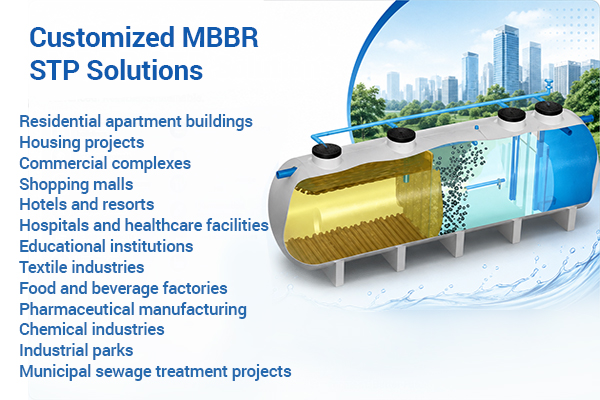
Each plant is designed to match the client's required treatment capacity, available space, environmental regulations, and future expansion needs.
High-Quality Equipment and Materials
The reliability of an MBBR STP depends greatly on the quality of its equipment and construction materials. At Green Genesis Engineering Limited, we prioritize durable, corrosion-resistant, and energy-efficient components to ensure long service life and dependable performance. Depending on project requirements, we use premium-quality materials such as:
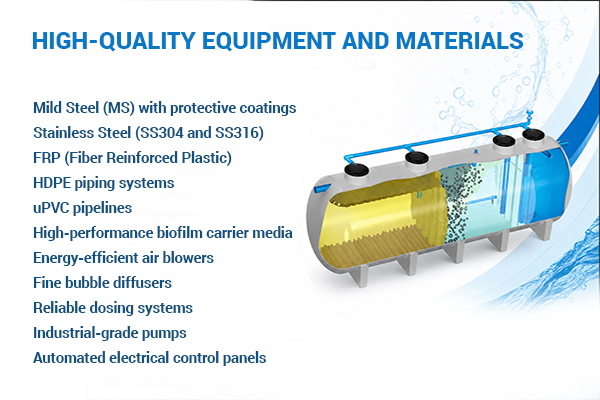
- Mild Steel (MS) with protective coatings
- Stainless Steel (SS304 and SS316)
- FRP (Fiber Reinforced Plastic)
- HDPE piping systems
- uPVC pipelines
- High-performance biofilm carrier media
- Energy-efficient air blowers
- Fine bubble diffusers
- Reliable dosing systems
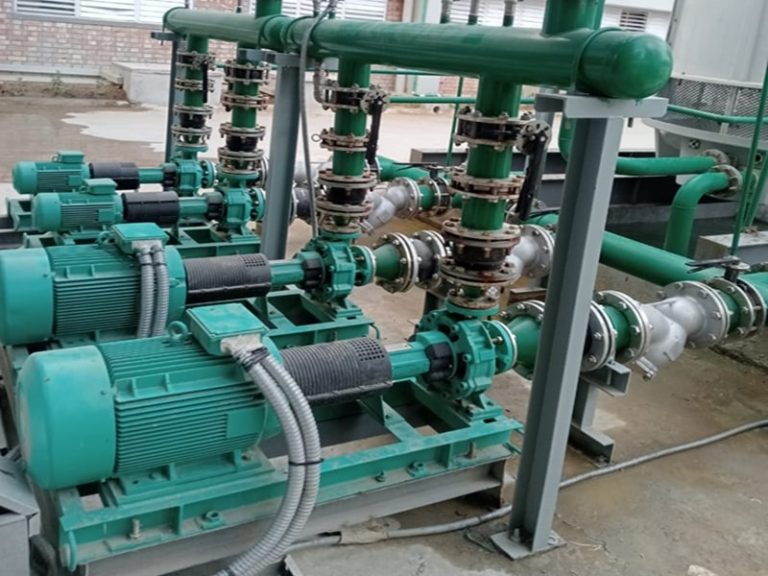
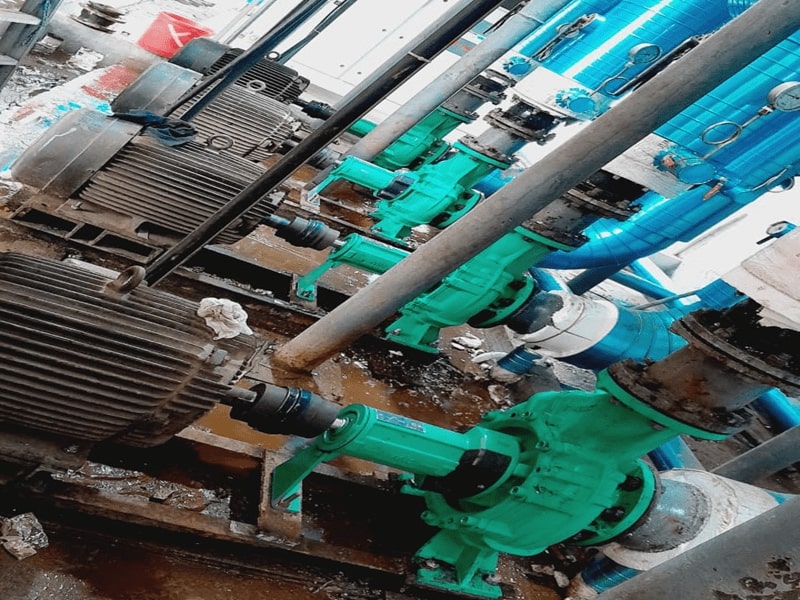
- Industrial-grade pumps
- Automated electrical control panels
All major equipment is selected based on proven performance, energy efficiency, and ease of maintenance.
Advanced Biofilm Carrier Media
The biofilm carrier media is the heart of every MBBR STP. It provides the surface where beneficial microorganisms grow and remove pollutants from wastewater. Our carrier media is designed to provide:
- High protected surface area
- Excellent biofilm attachment
- Long service life
- Chemical resistance
- Uniform movement within the reactor
- Low maintenance
- Stable biological performance
The optimized design of the carrier media enhances treatment efficiency while maintaining consistent operation under varying wastewater conditions.
Automation and Smart Control
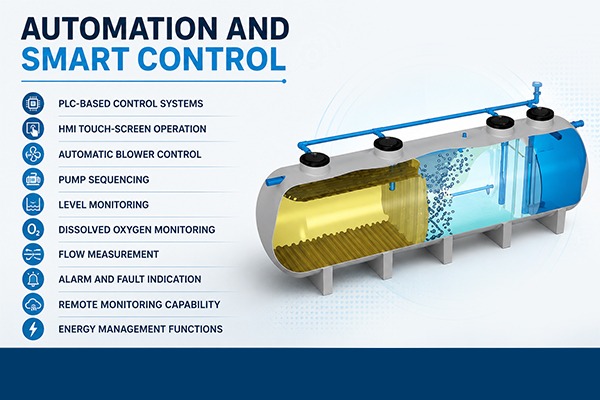
Modern wastewater treatment plants benefit greatly from automation. Green Genesis Engineering Limited integrates intelligent control systems into our MBBR STP solutions to improve operational efficiency and reduce manual intervention. Depending on the project scope, automation features may include:
- PLC-based control systems
- HMI touch-screen operation
- Automatic blower control
- Pump sequencing
- Level monitoring
- Dissolved oxygen monitoring
- Flow measurement
- Alarm and fault indication
- Remote monitoring capability
- Energy management functions
Automation helps improve treatment consistency while reducing operational costs.
Energy-Efficient Operation
Energy consumption is one of the largest operating expenses in any sewage treatment plant. Our engineering team carefully optimizes every MBBR STP to minimize power consumption without compromising treatment performance. Energy-saving strategies include:
- Efficient aeration system design
- High-efficiency air blowers
- Optimized diffuser layout
- Variable Frequency Drives (VFD)
- Intelligent process control
- Reduced hydraulic losses
- Proper equipment sizing
These measures contribute to lower electricity costs throughout the plant's operating life.
Installation and Commissioning Process
Proper installation is essential for the successful operation of an MBBR STP. Green Genesis Engineering Limited follows a structured installation methodology that ensures every component functions as designed.
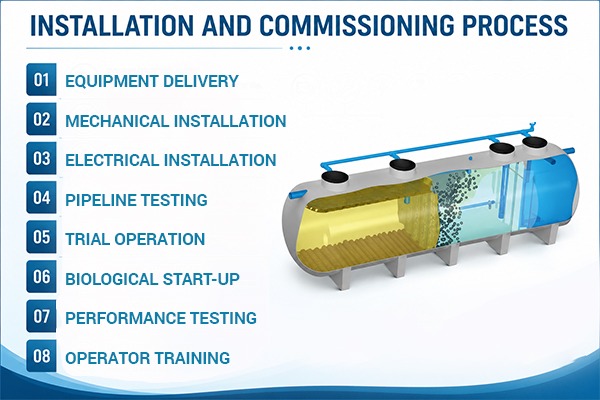 Performance Testing: Water quality parameters are monitored to confirm that the treatment plant achieves the required performance standards.
Operator Training: Our engineers provide comprehensive training to plant operators, ensuring they understand routine operation, monitoring, maintenance, and troubleshooting.
Our installation process typically includes:
Site Preparation: The installation area is inspected to verify civil works, foundation readiness, utility connections, and accessibility.
Equipment Delivery: All equipment is transported safely to the project site with proper handling and protection.
Mechanical Installation: Major process equipment, tanks, piping, pumps, blowers, diffusers, valves, and accessories are installed according to engineering drawings.
Electrical Installation: Control panels, instrumentation, cable routing, motors, and automation systems are installed and tested.
Pipeline Testing: All pipelines are pressure-tested and inspected for leaks before startup.
Trial Operation: The plant is operated under controlled conditions to verify mechanical and electrical performance.
Biological Start-Up: The biological reactor is seeded with microorganisms and gradually brought into stable operation.
Operation and Maintenance of an MBBR STP
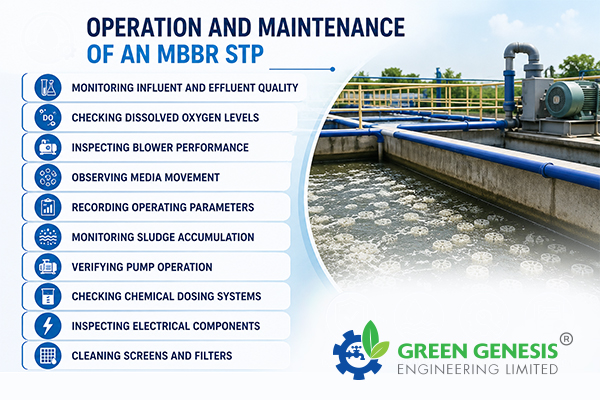
One of the biggest advantages of an MBBR STP is its relatively simple operation compared to many conventional biological treatment systems. However, regular maintenance remains essential to ensure consistent performance and extend equipment life. Routine operation includes:
- Monitoring influent and effluent quality
- Checking dissolved oxygen levels
- Inspecting blower performance
- Observing media movement
- Recording operating parameters
- Monitoring sludge accumulation
- Verifying pump operation
- Checking chemical dosing systems
- Inspecting electrical components
- Cleaning screens and filters
Preventive maintenance significantly reduces the likelihood of unexpected breakdowns and helps maintain stable treatment efficiency.
Environmental Benefits of MBBR STP
Installing an efficient MBBR STP provides numerous environmental benefits beyond regulatory compliance. Key environmental advantages include:
Protection of Natural Water Resources: Proper wastewater treatment prevents untreated sewage from contaminating rivers, canals, lakes, and groundwater, helping preserve aquatic ecosystems.
Reduction of Water Pollution: By removing organic pollutants, suspended solids, and harmful microorganisms, MBBR systems significantly improve the quality of discharged water.
Water Reuse Opportunities: Treated wastewater can often be reused for landscaping, toilet flushing, cooling systems, floor cleaning, and other non-potable applications, reducing demand for freshwater.
Lower Carbon Footprint: Optimized aeration and efficient biological treatment reduce energy consumption, contributing to lower greenhouse gas emissions over the plant's lifetime.
Sustainable Urban Development: Modern sewage treatment infrastructure supports healthier communities and promotes environmentally responsible development.
Factors Affecting the Cost of an MBBR STP
The cost of an MBBR STP varies depending on several technical and project-specific factors. Rather than focusing solely on initial investment, it is important to evaluate the overall life-cycle cost, including operation, maintenance, energy consumption, and future scalability. Key factors that influence project cost include:
- Required treatment capacity (KLD or m³/day)
- Wastewater characteristics
- Influent BOD and COD levels
- Required effluent quality
- Site conditions and available space
- Civil construction requirements
- Tank material (MS, SS, FRP, RCC)
- Type and quality of mechanical equipment
- Automation level
- Instrumentation requirements
- Water reuse objectives
- Sludge management system
- Future expansion plans
At Green Genesis Engineering Limited, we focus on providing cost-effective solutions without compromising quality, reliability, or environmental performance.
Our Commitment to Quality
Quality is at the core of every project we undertake. From engineering design and equipment selection to fabrication, installation, and after-sales support, we maintain strict quality standards throughout the project lifecycle. Our commitment includes:
- Customized engineering solutions
- Reliable and durable equipment
- Energy-efficient system design
- Compliance with environmental regulations
- Professional installation practices
- Thorough performance testing
- Comprehensive operator training
- Responsive technical support
- Long-term customer satisfaction
We believe that every successful MBBR STP reflects not only advanced technology but also careful planning, precision engineering, and dedicated customer service.
Frequently Asked Questions (FAQs) About MBBR STP
1. What is an MBBR STP?
An MBBR STP (Moving Bed Biofilm Reactor Sewage Treatment Plant) is an advanced biological wastewater treatment system that uses specially designed floating biofilm carrier media inside an aeration tank. Beneficial microorganisms grow on the surface of these carriers and break down organic pollutants, producing high-quality treated water suitable for discharge or reuse.
2. How does an MBBR STP work?
An MBBR STP treats wastewater through several stages, including screening, equalization, biological treatment, clarification, filtration, and disinfection. During biological treatment, microorganisms attached to moving carrier media consume organic matter and significantly reduce pollutants such as BOD, COD, and suspended solids.
3. What are the main advantages of an MBBR STP?
The key benefits of an MBBR STP include:
- High treatment efficiency
- Compact plant design
- Lower sludge production
- Easy operation
- Minimal maintenance
- Stable performance under varying wastewater loads
- Lower operating costs
- Long equipment life
- Easy capacity expansion
- Energy-efficient operation
4. What types of wastewaters can an MBBR STP treat?
An MBBR STP can effectively treat domestic sewage and a wide range of industrial wastewater, including wastewater generated by residential buildings, hotels, hospitals, shopping malls, food processing plants, textile industries, pharmaceutical factories, educational institutions, commercial complexes, and manufacturing facilities.
5. Is MBBR STP suitable for residential apartment projects?
Yes. MBBR STP is an excellent solution for apartment buildings, housing societies, condominiums, and residential townships. Its compact design, reliable performance, and low maintenance requirements make it ideal for residential developments with limited installation space.
6. What is the difference between MBBR STP and SBR STP?
The primary difference is that an MBBR STP operates as a continuous-flow process using biofilm carriers, while an SBR (Sequencing Batch Reactor) treats wastewater in batches. MBBR systems generally offer simpler operation, better handling of flow variations, and easier plant expansion.
7. What is the difference between MBBR STP and MBR STP?
An MBBR STP uses biofilm carrier media for biological treatment, whereas an MBR (Membrane Bioreactor) combines biological treatment with membrane filtration. MBR systems produce exceptionally high-quality treated water but usually involve higher capital costs, greater energy consumption, and more intensive maintenance due to membrane cleaning and replacement.
8. Can treated water from an MBBR STP be reused?
Yes. Depending on the treatment configuration and local regulations, water treated by an MBBR STP can be reused for landscape irrigation, toilet flushing, cooling tower makeup, floor cleaning, gardening, construction activities, and other non-potable applications.
9. What capacity of MBBR STP is available?
MBBR STPs can be designed in a wide range of capacities, from small systems serving residential buildings to large-scale plants handling municipal and industrial wastewater. Capacity selection depends on daily wastewater generation, future expansion requirements, and treatment objectives.
10. Does an MBBR STP require a large installation area?
No. One of the biggest advantages of MBBR technology is its compact footprint. Because the moving biofilm carriers provide a large surface area for microbial growth, the reactor can achieve high treatment efficiency within a relatively small space, making it suitable for sites with limited land availability.
11. Is an MBBR STP energy efficient?
Yes. Modern MBBR STPs are designed with optimized aeration systems, efficient blowers, and intelligent control strategies that help reduce electricity consumption while maintaining excellent treatment performance.
12. How often does an MBBR STP require maintenance?
Routine maintenance is generally straightforward and includes inspecting blowers, pumps, diffusers, screens, and electrical systems, as well as monitoring water quality and sludge levels. With regular preventive maintenance, an MBBR STP can operate reliably for many years.
13. Can an existing sewage treatment plant be upgraded to MBBR technology?
Yes. Many existing sewage treatment plants can be upgraded by incorporating MBBR technology. This often increases treatment capacity and improves effluent quality without requiring major civil construction or additional land.
14. What pollutants can an MBBR STP remove?
An MBBR STP is designed to remove a wide range of contaminants, including:
- Biochemical Oxygen Demand (BOD)
- Chemical Oxygen Demand (COD)
- Total Suspended Solids (TSS)
- Ammonia
- Organic matter
- Pathogenic microorganisms (after disinfection)
- Nitrogen compounds (with appropriate process design)
15. Is MBBR STP environmentally friendly?
Yes. MBBR technology supports sustainable wastewater management by reducing water pollution, protecting natural water resources, enabling water reuse, lowering sludge production, and improving overall environmental performance.
16. How long does it take to install an MBBR STP?
Installation time depends on the plant capacity, site conditions, civil construction requirements, and project complexity. Smaller systems may be completed within a few weeks, while larger industrial or municipal projects can take several months. Proper planning and engineering help ensure timely project execution.
17. What factors should be considered when selecting an MBBR STP?
Important factors include:
- Daily wastewater flow
- Wastewater characteristics
- Required effluent quality
- Available installation space
- Local environmental regulations
- Future expansion plans
- Energy efficiency
- Ease of operation
- Maintenance requirements
- Long-term operating costs
Choosing an experienced engineering company ensures that these factors are properly evaluated during system design.
18. Why should I choose Green Genesis Engineering Limited for an MBBR STP?
Green Genesis Engineering Limited provides customized MBBR STP solutions designed to meet the specific needs of each client. Our services include system design, engineering, equipment selection, manufacturing, installation, commissioning, operator training, and after-sales technical support. We focus on delivering reliable, energy-efficient, and environmentally responsible wastewater treatment systems that provide long-term value.
19. How much does an MBBR STP cost in Bangladesh?
The cost of an MBBR STP depends on several factors, including plant capacity, wastewater characteristics, treatment requirements, construction materials, automation level, and site conditions. Since every project is unique, Green Genesis Engineering Limited offers customized solutions and project-specific quotations based on detailed technical evaluations.
20. How can I get a quotation for an MBBR STP from Green Genesis Engineering Limited?
Getting a quotation is simple. Contact Green Genesis Engineering Limited with details such as your project location, estimated wastewater flow, source of wastewater, available installation space, and desired treated water quality. Our engineering team will assess your requirements and provide a customized MBBR STP proposal, technical recommendation, and competitive quotation tailored