Introduction
A Packaged STP Plant, also known as a Packaged Sewage Treatment Plant, is a pre-engineered and factory-assembled wastewater treatment solution designed to treat domestic sewage and biodegradable wastewater in a compact and efficient system.
Unlike conventional sewage treatment plants that may require extensive civil construction and multiple separate treatment structures, a packaged STP integrates several treatment processes into a compact, modular unit. Depending on the selected technology and project requirements, a packaged sewage treatment plant may incorporate biological treatment, clarification, filtration, disinfection, and sludge management within a single integrated system.
The compact nature of a packaged STP makes it an attractive solution for residential developments, apartment complexes, hotels, resorts, hospitals, schools, offices, commercial buildings, factories, and other facilities where space, installation time, and operational simplicity are important considerations.
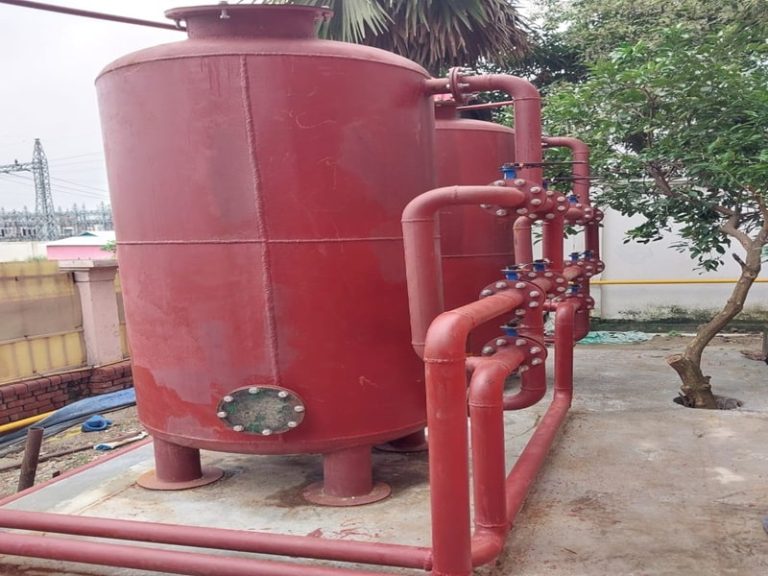
Packaged STP plants can be manufactured using materials such as Mild Steel (MS), Stainless Steel (SS), FRP, GRP, HDPE, or other suitable materials, depending on the plant capacity, installation environment, design requirements, and expected service life. With proper engineering, a Packaged STP Plant can provide reliable wastewater treatment while minimizing construction requirements and allowing faster project implementation.
What is a Packaged STP Plant?
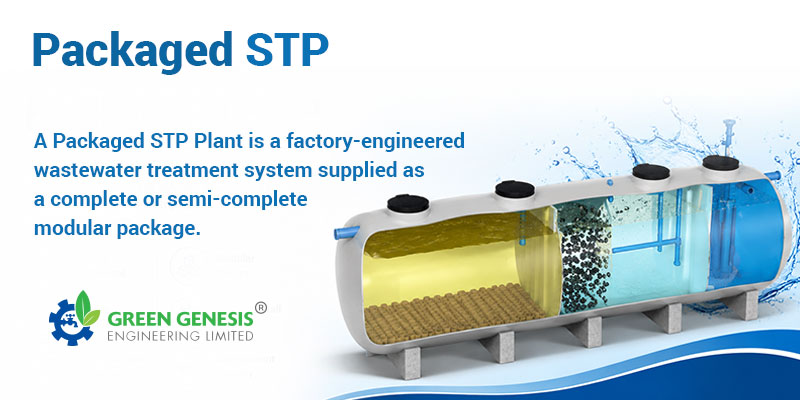
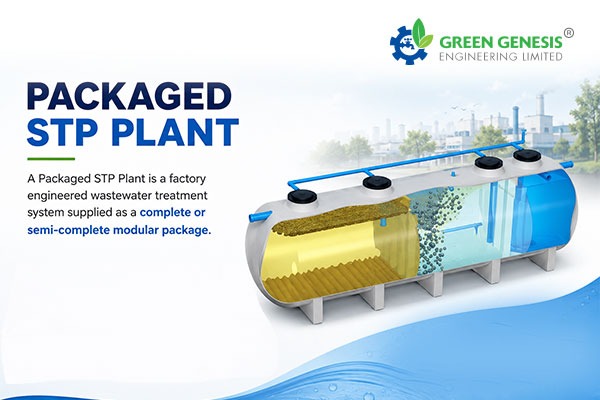
A Packaged STP Plant is a factory-engineered wastewater treatment system supplied as a complete or semi-complete modular package. The treatment units are designed and manufactured according to the required wastewater flow and treatment objectives. Major components may be assembled within a single tank, multiple connected tanks, or modular equipment packages. A packaged STP may include:
- Inlet chamber
- Screening system
- Equalization tank
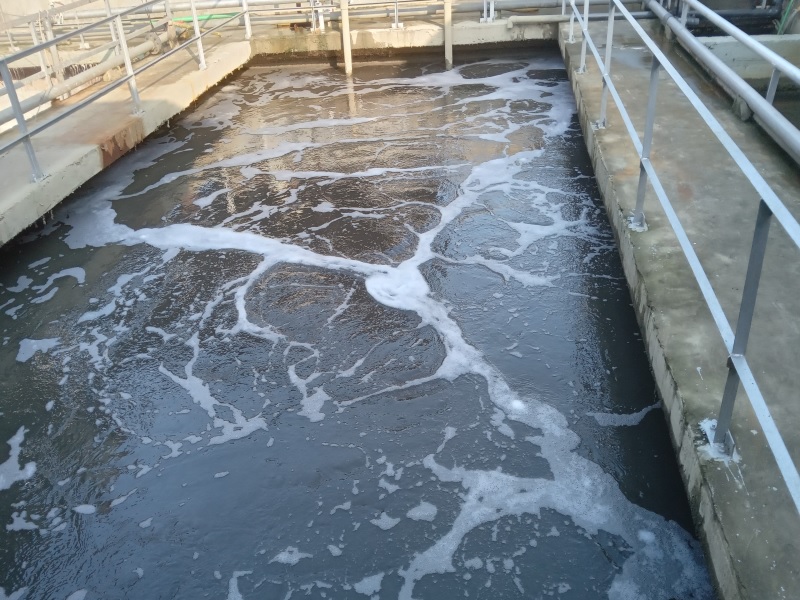
- Biological treatment reactor
- Aeration system
- Secondary clarification
- Filtration
- Disinfection
- Sludge holding
- Control panel
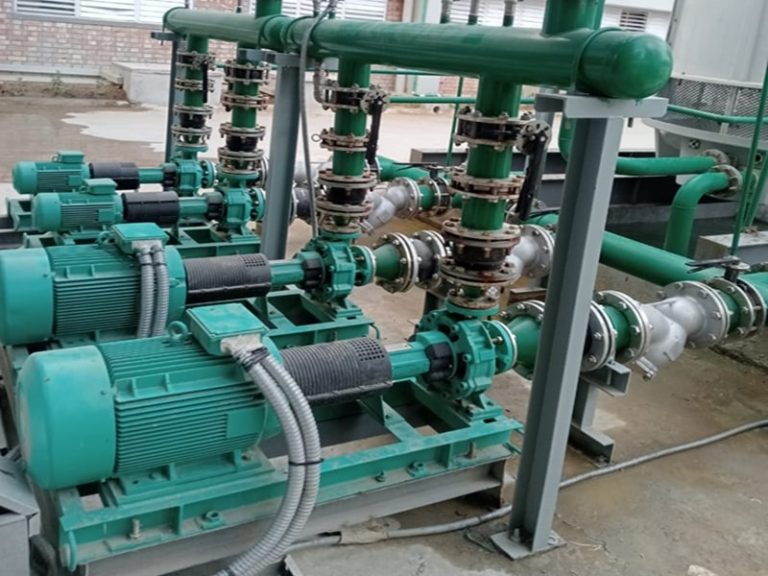
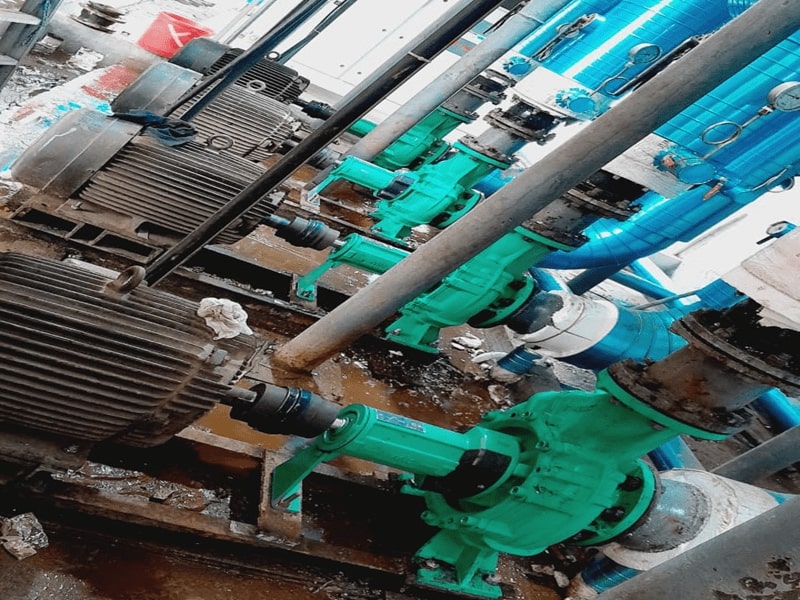
- Pumps
- Blowers
- Instrumentation
The exact configuration depends on the selected biological treatment technology.
Common technologies used in packaged STP plants include:
- MBBR
- SBR
- ASP
- MBR
- RBC
- MBBR-MBR
- Other advanced biological treatment configurations
Therefore, the term "Packaged STP" describes the form and method of system delivery, while MBBR, SBR, ASP, MBR, or RBC describes the specific wastewater treatment process used inside the plant.
How Does a Packaged STP Plant Work?
The operating principle of a packaged STP depends on the selected treatment technology. However, a typical packaged sewage treatment plant may follow a process such as:
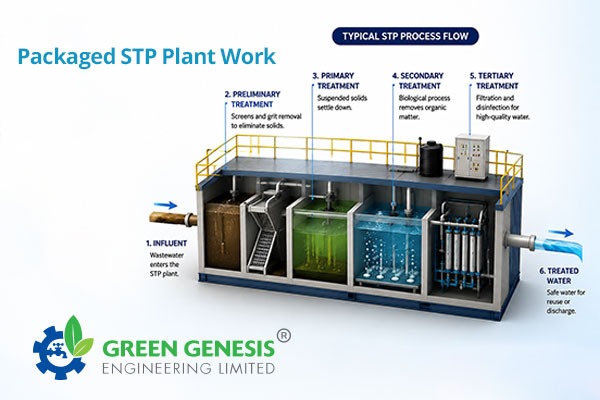
Raw Sewage
↓
Screening
↓
Grit Removal
↓
Equalization
↓
Biological Treatment
↓
Secondary Clarification
↓
Tertiary Treatment
↓
Disinfection
↓
Treated Water
The sludge generated during treatment may be managed through:
Sludge Collection
↓
Sludge Holding
↓
Sludge Dewatering
↓
Final Disposal or Further Management
In some advanced packaged STP systems, several of these treatment stages are integrated into a compact tank structure.
Main Components of a Packaged Sewage Treatment Plant
A Packaged STP Plant may contain several integrated treatment and support systems.
1. Inlet Chamber
The inlet chamber receives raw sewage from the building, residential development, commercial facility, or industrial premises. The chamber directs the incoming wastewater toward the preliminary treatment stage.
2. Screening System
Screening is generally the first treatment step. The purpose is to remove larger materials that may damage pumps or interfere with biological treatment. Common materials removed include:
- Plastic
- Paper
- Cloth
- Sanitary waste
- Packaging materials
- Large floating debris
Depending on plant capacity, manual or mechanical screening systems may be used.
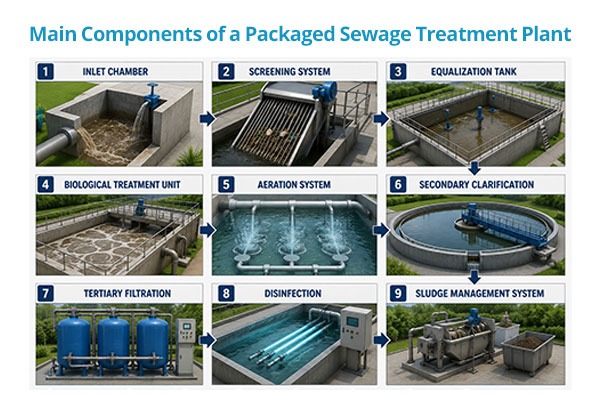
3. Equalization Tank
An equalization tank may be incorporated to balance variations in wastewater flow and pollutant loading. Wastewater generation is rarely constant throughout the day. For example, residential buildings may experience high wastewater flows during morning and evening periods. Equalization helps stabilize:
- Flow rate
- Organic loading
- Pollutant concentration
This provides more consistent conditions for the downstream biological treatment process.
4. Biological Treatment Unit
The biological reactor is the core treatment stage of the Packaged STP Plant. Depending on the selected technology, biological treatment may be based on:
- Suspended-growth microorganisms
- Attached-growth biofilm
- Sequential batch treatment
- Membrane bioreactor technology
The microorganisms consume biodegradable organic matter and convert it into more stable biological products.
5. Aeration System
For aerobic biological processes, oxygen must be supplied to microorganisms. Packaged STPs may use:
- Fine bubble diffusers
- Coarse bubble diffusers
- Air blowers
- Mechanical aerators
- Jet aeration systems
Efficient aeration is essential for maintaining biological activity and achieving effective organic pollutant removal. Modern systems may incorporate automatic DO monitoring and blower control to improve energy efficiency.
6. Secondary Clarification
In systems using suspended-growth biological treatment, a clarification stage may be provided to separate biological solids from treated water. The biological solids settle at the bottom, while clarified water flows toward the next treatment stage. Depending on the process configuration, sludge may be recycled or removed from the system.
7. Tertiary Filtration
Where higher-quality treated water is required, tertiary filtration may be incorporated. Possible filtration systems include:
- Sand filtration
- Multimedia filtration
- Activated carbon filtration
- Pressure filters
- Membrane filtration
The choice depends on the intended application of the treated water.
8. Disinfection
Disinfection is an important final treatment stage when treated wastewater is intended for reuse or when pathogen reduction is required. Common disinfection technologies include:
- UV disinfection
- Chlorination
- Sodium hypochlorite dosing
The appropriate disinfection method depends on project requirements and applicable regulations.
9. Sludge Management System
Biological wastewater treatment generates sludge that must be properly managed. A packaged STP may include a sludge holding tank or sludge transfer arrangement. Depending on plant size, sludge may be dewatered using:
- Filter press
- Screw press
- Belt filter press
- Centrifuge
The final sludge should be managed according to applicable environmental requirements.
Types of Packaged STP Plants
Packaged STP systems can be classified according to the biological treatment technology used.
Packaged MBBR STP
A packaged MBBR STP uses moving biofilm carrier media to support microorganisms. The carriers provide a large surface area for biofilm growth, allowing effective biological treatment within a compact reactor. MBBR technology is widely considered for applications where compact design and process flexibility are important.
Packaged SBR STP
A packaged SBR STP uses a sequencing batch reactor to perform treatment processes in a time-controlled cycle.
Typical stages include:
Fill → React → Settle → Decant → Idle
SBR systems can integrate biological treatment and clarification within the same reactor, making them suitable for applications where space optimization is important.
Packaged MBR STP
A packaged MBR, or Membrane Bioreactor, combines biological treatment with membrane filtration. Membranes provide a physical barrier that can produce high-quality treated water with low suspended solids. MBR systems are particularly attractive where treated water reuse and high effluent quality are important.
Packaged RBC STP
A packaged RBC STP uses rotating biological contactors to support microbial biofilm growth. The rotating discs alternately contact wastewater and atmospheric oxygen, allowing microorganisms to biologically treat organic pollutants. RBC technology can be considered for selected decentralized and smaller-scale applications.
Packaged ASP STP
A packaged Activated Sludge Process STP uses suspended microorganisms to biologically treat wastewater. The system generally includes an aeration tank and secondary clarification. Packaged ASP systems can be suitable for projects where conventional biological treatment is preferred.
Advantages of Packaged STP Plants
Packaged STP systems offer several important benefits.
Compact Design
Packaged systems are designed to integrate multiple treatment stages into a relatively compact footprint. This makes them suitable for projects with limited available space.
Faster Installation
Because many components are manufactured and assembled in a controlled factory environment, installation at the project site can be faster than constructing a fully conventional civil-based STP.
Reduced Civil Construction
Depending on the design, packaged systems may reduce the need for extensive civil construction. This can potentially shorten project schedules and reduce construction complexity.
Factory-Controlled Manufacturing
Manufacturing in a controlled environment allows better control over fabrication quality, welding, coating, assembly, and equipment integration.
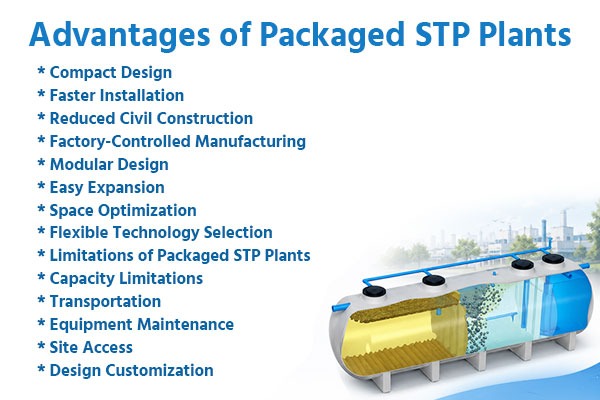
Modular Design
Packaged STPs can be designed as modular systems. This allows the plant configuration to be adapted to different wastewater flow rates and site conditions.
Easy Expansion
Some packaged STP systems can be expanded by adding additional modules or treatment capacity, subject to the original design and site conditions.
Space Optimization
The integrated configuration allows multiple treatment processes to be arranged efficiently within a limited area.
Flexible Technology Selection
Packaged STPs can be based on different biological technologies, allowing the treatment process to be selected according to project requirements.
Limitations of Packaged STP Plants
Although packaged systems offer many advantages, several factors should be considered before selecting a system.
Capacity Limitations
Very large wastewater treatment requirements may require multiple modules or a conventional civil-based treatment plant.
Transportation
Large packaged units may require special transportation and lifting arrangements.
Equipment Maintenance
Pumps, blowers, mechanical equipment, control panels, and instrumentation require regular maintenance.
Site Access
The project site must have sufficient access for transportation, unloading, and installation.
Design Customization
A packaged STP should not be treated as a one-size-fits-all product. The system must be designed according to actual wastewater characteristics and project requirements.
Packaged STP vs. Conventional STP
The primary difference between a packaged STP and a conventional STP is the method of construction and system integration. A conventional STP often relies heavily on individually constructed concrete tanks and civil structures. A packaged STP typically integrates treatment processes into factory-fabricated modular units.
Packaged STP
- Compact
- Faster installation
- Factory-fabricated
- Modular
- Reduced site construction
- Suitable for space-constrained projects
Conventional STP
- Greater flexibility for very large capacities
- Extensive civil construction
- Longer construction period in many cases
- Suitable for large municipal and industrial applications
- Easier customization of large structures
The right choice depends on plant capacity, site conditions, budget, project timeline, and long-term operational requirements.
Packaged STP for Residential Buildings
Residential buildings and apartment complexes are among the most common applications for packaged sewage treatment systems. A packaged STP can be designed according to:
- Number of residents
- Daily wastewater generation
- Peak wastewater flow
- Available installation space
- Required treated water quality
Treated wastewater may be considered for non-potable reuse applications such as toilet flushing and landscaping when suitable tertiary treatment and disinfection are provided.
Packaged STP for Hotels and Resorts
Hotels and resorts often require reliable wastewater treatment within limited spaces. A packaged STP can provide a compact treatment solution while allowing treated wastewater to be considered for applications such as:
- Landscape irrigation
- Gardening
- Toilet flushing
- Road cleaning
The treatment system should be designed to accommodate variations in occupancy and wastewater generation.
Packaged STP for Hospitals
Hospital wastewater may contain higher levels of organic matter, suspended solids, pathogens, and potentially specific contaminants. A hospital packaged STP may require additional pre-treatment, disinfection, or advanced treatment depending on wastewater characteristics and local requirements. A detailed wastewater assessment should be performed before selecting the treatment technology.
Packaged STP for Schools and Institutions
Schools, universities, training centers, and institutional campuses can benefit from compact wastewater treatment systems. A packaged STP can be designed according to student population, staff numbers, daily operating hours, and wastewater generation patterns. For seasonal or intermittent facilities, equalization and process control should be carefully considered.
Packaged STP for Commercial Buildings
Commercial buildings, offices, shopping centers, and business parks may generate wastewater with varying daily flow patterns. A packaged STP can provide a dedicated wastewater treatment solution where centralized sewerage infrastructure is unavailable or where treated water reuse is desired.
Packaged STP for Industrial Applications
Packaged STPs can be considered for industrial facilities where the wastewater is primarily domestic sewage or contains biodegradable pollutants suitable for biological treatment. However, industrial wastewater should not automatically be treated using a standard packaged STP. Industrial wastewater may contain:
- Toxic chemicals
- Heavy metals
- High salinity
- Oil and grease
- Extreme pH
- High organic loading
Pre-treatment or a specialized industrial wastewater treatment system may therefore be necessary.
Energy Efficiency in Packaged STP Plants
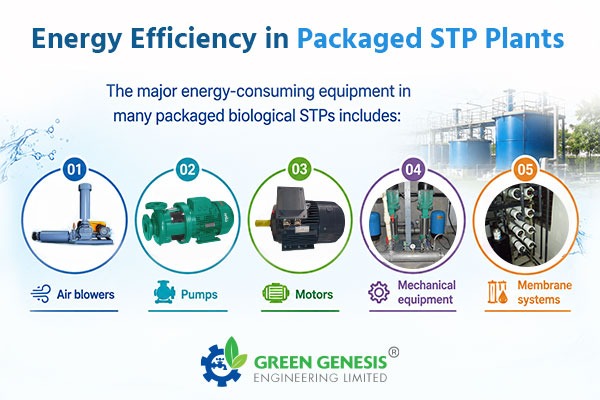
Energy consumption is an important consideration in wastewater treatment.The major energy-consuming equipment in many packaged biological STPs includes:
- Air blowers
- Pumps
- Motors
- Mechanical equipment
- Membrane systems
Energy efficiency can be improved through:
- High-efficiency blowers
- Fine bubble aeration
- Variable Frequency Drives
- Automatic DO control
- Efficient pump selection
- Online monitoring
- Optimized process control
Selecting the right technology for the wastewater characteristics can also significantly influence long-term energy consumption.
Automation and Control System
Modern Packaged STP Plants can be equipped with advanced control systems. A PLC-based automation system can monitor and control:
- Pumps
- Blowers
- Valves
- Aeration
- Water levels
- Flow rates
- DO levels
- Chemical dosing
- Equipment alarms
A SCADA system may also be integrated for centralized monitoring and data recording. Automation can help improve process consistency, reduce manual intervention, and provide early warning of equipment problems.
Treated Water Reuse from a Packaged STP
One of the major advantages of wastewater treatment is the potential for water reuse. Depending on the treatment process and final water quality, treated wastewater may be considered for:
- Toilet flushing
- Gardening
- Landscape irrigation
- Road washing
- Cooling applications
- Other non-potable uses
Additional tertiary treatment and disinfection may be required to achieve the appropriate water quality for specific reuse applications. Treated wastewater should not be assumed to be suitable for drinking water without a purpose-designed advanced potable water treatment system and appropriate regulatory approval.
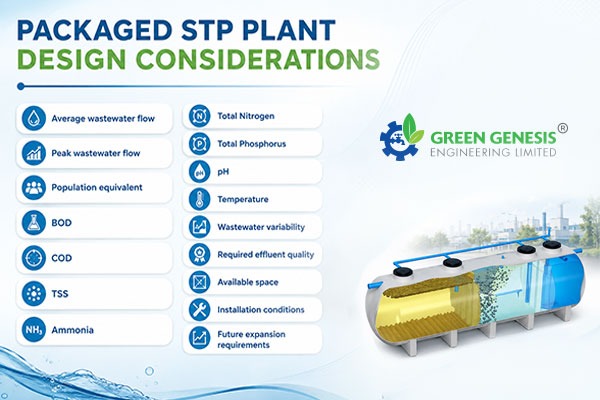
Packaged STP Plant Design Considerations
A successful packaged STP begins with proper engineering. Important design parameters include:
- Average wastewater flow
- Peak wastewater flow
- Population equivalent
- BOD
- COD
- TSS
- Ammonia
- Total Nitrogen
- Total Phosphorus
- pH
- Temperature
- Wastewater variability
- Required effluent quality
- Available space
- Installation conditions
- Future expansion requirements
The plant should be designed based on actual wastewater characteristics rather than relying solely on generic assumptions.
Materials Used for Packaged STP Construction
Packaged STP units can be manufactured from different materials. Common options include:
Mild Steel (MS)
MS tanks can provide strong structural performance when properly fabricated and protected with suitable anti-corrosion coatings.
Stainless Steel (SS)
Stainless steel may be selected for applications requiring enhanced corrosion resistance and long service life.
FRP / GRP
Fiber-reinforced plastic materials offer corrosion resistance and can be suitable for various wastewater treatment applications.
HDPE
High-density polyethylene can provide good chemical resistance and durability for selected applications. The appropriate material depends on wastewater characteristics, environmental exposure, installation conditions, design life, and budget.
Operation and Maintenance of Packaged STP
Regular operation and maintenance are essential for maintaining treatment performance. Important activities may include:
- Cleaning screens
- Checking pumps
- Servicing blowers
- Inspecting diffusers
- Monitoring DO
- Checking MLSS
- Removing excess sludge
- Cleaning filters
- Maintaining disinfection systems
- Calibrating instruments
- Inspecting control panels
Preventive maintenance helps reduce unexpected equipment failures and extends the operating life of the plant.
Why Choose a Packaged STP Plant?
A Packaged STP Plant can be an excellent solution when a project requires:
- Compact wastewater treatment
- Faster installation
- Reduced civil construction
- Factory-fabricated equipment
- Modular design
- Easy site integration
- Space-efficient treatment
- Reliable biological wastewater treatment
However, the best packaged STP is not necessarily the smallest or cheapest system. The correct solution should be selected based on wastewater characteristics, required effluent quality, site conditions, energy consumption, maintenance requirements, and total life-cycle cost.
Professional Packaged STP Plant Solutions
Every wastewater treatment project has unique requirements. A professional Packaged STP solution should begin with wastewater analysis and process selection, followed by detailed engineering and equipment design. The complete project process may include:
Wastewater Assessment
↓
Process Selection
↓
Detailed Engineering
↓
Equipment Design
↓
Factory Fabrication
↓
Quality Inspection
↓
Transportation
↓
Site Installation
↓
Commissioning
↓
Operator Training
↓
After-Sales Service
This integrated approach helps ensure that the Packaged STP Plant performs reliably throughout its service life.
Frequently Asked Questions (FAQs) About Packaged STP Plant
1. What is a Packaged STP Plant?
A Packaged STP Plant, or Packaged Sewage Treatment Plant, is a pre-engineered and factory-fabricated wastewater treatment system designed to treat domestic sewage and suitable biodegradable wastewater. It combines multiple treatment processes into a compact, modular system that can be installed at residential, commercial, institutional, and other suitable facilities.
2. How does a Packaged STP Plant work?
A Packaged STP typically receives raw sewage and passes it through several treatment stages, such as screening, equalization, biological treatment, clarification, filtration, and disinfection. The exact process depends on the selected technology, such as MBBR, SBR, ASP, RBC, or MBR.
3. What is the difference between a Packaged STP and a conventional STP?
The main difference is the construction and delivery approach. A conventional STP often uses large civil structures constructed at the project site, while a Packaged STP is generally factory-fabricated and supplied as a compact modular system. Packaged systems can reduce site construction work and may allow faster installation.
4. What technologies can be used in a Packaged STP?
Depending on the project requirements, Packaged STP Plants may use technologies such as:
- MBBR
- SBR
- Activated Sludge Process (ASP)
- RBC
- MBR
- Other advanced biological treatment processes
The most suitable technology depends on wastewater characteristics, capacity, available space, required effluent quality, energy consumption, and operating requirements.
5. Is a Packaged STP suitable for residential buildings?
Yes. Packaged STPs are widely considered for apartment buildings, housing complexes, residential communities, and gated developments. The plant should be designed based on the number of residents, wastewater generation, peak flow, and required treated water quality.
6. Is a Packaged STP suitable for hotels and resorts?
Yes. A Packaged STP can be designed for hotels, resorts, restaurants, and similar facilities. The design should consider variations in occupancy, seasonal wastewater generation, kitchen wastewater, and other site-specific factors.
7. Can a Packaged STP be used for hospitals?
Yes, but hospital wastewater may require special consideration because it can contain higher pathogen levels and other specific contaminants. Depending on the wastewater characteristics and local requirements, additional pre-treatment, advanced biological treatment, and effective disinfection may be necessary.
8. Can a Packaged STP treat industrial wastewater?
A Packaged STP can treat industrial wastewater only when the wastewater characteristics are suitable for the selected biological treatment process. Industrial wastewater containing toxic chemicals, heavy metals, high salinity, oil, extreme pH, or other inhibitory substances may require specialized pre-treatment or a dedicated industrial wastewater treatment plant.
9. What are the main components of a Packaged STP?
Depending on the design, a Packaged STP may include:
- Inlet chamber
- Screening system
- Grit removal
- Equalization tank
- Biological reactor
- Aeration system
- Secondary clarifier
- Tertiary filtration
- Disinfection system
- Sludge holding tank
- Pumps
- Blowers
- Control panel
- Instrumentation
The actual configuration varies according to the selected treatment technology.
10. Does a Packaged STP require an aeration system?
Many biological Packaged STPs require oxygen for microorganisms to break down biodegradable organic matter. Depending on the process, oxygen may be supplied using blowers and diffusers or through other aeration methods. Some technologies, such as RBC, use a different oxygen transfer mechanism.
11. What is the role of an equalization tank in a Packaged STP?
An equalization tank helps balance variations in wastewater flow and pollutant loading. It provides a more consistent wastewater flow to the biological treatment system, which can improve process stability and reduce the impact of sudden hydraulic or organic load changes.
12. What is the typical process flow of a Packaged STP?
A typical process may be:
Raw Sewage → Screening → Equalization → Biological Treatment → Clarification → Filtration → Disinfection → Treated Water
The actual process flow depends on the selected treatment technology and final effluent requirements.
13. Can a Packaged STP remove BOD?
Yes. Properly designed biological Packaged STPs can significantly reduce biodegradable organic matter, including BOD. The actual removal efficiency depends on wastewater characteristics, biological process selection, loading conditions, and plant operation.
14. Can a Packaged STP remove COD?
A Packaged STP can effectively remove the biodegradable portion of COD through biological treatment. However, non-biodegradable or difficult-to-degrade organic compounds may require additional treatment.
15. Can a Packaged STP remove TSS?
Yes. TSS can be removed through a combination of biological treatment, sedimentation, clarification, filtration, and other appropriate treatment processes.
16. Can a Packaged STP remove ammonia?
Yes. A suitably designed biological system can remove ammonia through nitrification. If strict nitrogen limits apply, additional biological nitrogen removal processes may be required.
17. Can treated water from a Packaged STP be reused?
Yes, depending on the final treated water quality and applicable regulations. With appropriate tertiary treatment and disinfection, treated wastewater may be suitable for certain non-potable applications, such as:
- Toilet flushing
- Gardening
- Landscape irrigation
- Road cleaning
- Other approved non-potable uses
The treatment level should always be matched to the intended reuse application.
18. Can Packaged STP treated water be used for drinking?
Generally, treated effluent from a conventional Packaged STP should not be considered drinking water. Potable water production requires a specially designed advanced treatment system, appropriate disinfection, stringent monitoring, and compliance with applicable drinking-water standards.
19. What are the main advantages of a Packaged STP Plant?
Key advantages may include:
- Compact design
- Faster installation
- Reduced site construction
- Factory-controlled fabrication
- Modular configuration
- Space optimization
- Flexible technology selection
- Easier project implementation
- Potential for future expansion
The actual benefits depend on the project design and site conditions.
20. Does a Packaged STP require civil construction?
Some civil work is usually required for installation, such as foundations, piping connections, electrical connections, access arrangements, and sometimes underground or above-ground structures. However, a packaged system can significantly reduce the amount of major civil construction compared with a fully conventional STP.
21. How much space is required for a Packaged STP?
The space requirement depends on the treatment capacity, selected technology, tank configuration, equipment arrangement, sludge handling system, and tertiary treatment requirements. A detailed layout should be prepared based on the project-specific requirements.
22. Can a Packaged STP be installed underground?
Yes, depending on the tank material, structural design, groundwater conditions, soil characteristics, accessibility, and engineering requirements. Some packaged systems are suitable for underground installation, while others are designed for above-ground placement.
23. What materials are used to manufacture Packaged STP tanks?
Packaged STP tanks may be manufactured using materials such as:
- Mild Steel (MS)
- Stainless Steel (SS)
- FRP/GRP
- HDPE
- Other suitable engineered materials
Material selection depends on wastewater characteristics, corrosion conditions, structural requirements, installation method, expected service life, and budget.
24. How long does it take to install a Packaged STP?
Installation time varies according to plant capacity, site preparation, tank configuration, civil work, equipment complexity, and utility connections. Since many components are factory-fabricated, packaged systems can often be installed faster than fully site-constructed conventional treatment plants.
25. Does a Packaged STP require regular maintenance?
Yes. Regular maintenance is essential for reliable and efficient operation. Typical maintenance activities include:
- Cleaning screens
- Checking pumps
- Servicing blowers
- Inspecting diffusers
- Monitoring biological parameters
- Removing excess sludge
- Cleaning filters
- Maintaining disinfection equipment
- Checking control panels
- Calibrating instruments
26. How often should a Packaged STP be serviced?
The service frequency depends on the treatment technology, equipment type, operating hours, wastewater characteristics, and manufacturer's recommendations. Routine inspections should be performed regularly, while major preventive maintenance should follow a planned maintenance schedule.
27. What happens if a Packaged STP is overloaded?
Overloading can reduce treatment efficiency and may result in poor BOD, COD, and TSS removal. Excessive hydraulic or organic loading can also affect biological stability, clarification, and sludge management. Therefore, the plant should be designed according to actual and future wastewater requirements.
28. Can a Packaged STP handle fluctuating wastewater flow?
Yes, when properly designed. Equalization tanks, appropriate process control, and correctly sized biological treatment units can help manage fluctuations in wastewater flow and organic loading.
29. What is the expected lifespan of a Packaged STP?
The service life depends on the tank material, fabrication quality, corrosion protection, mechanical equipment, installation conditions, operation, and maintenance. Properly designed and maintained systems can provide long-term service, but individual components may require replacement or refurbishment during the plant's operating life.
30. Is a Packaged STP energy efficient?
Energy efficiency depends largely on the selected biological process and equipment. Energy-saving measures may include high-efficiency blowers, fine-bubble diffusers, efficient pumps, variable-frequency drives, automatic dissolved oxygen control, and optimized process operation.
31. What is the difference between a Packaged MBBR STP and a Packaged SBR STP?
A Packaged MBBR STP uses moving carrier media on which microorganisms grow as biofilm, while a Packaged SBR STP performs biological treatment and settling in sequential time-based cycles within a reactor. MBBR generally operates as a continuous-flow process, whereas SBR operates in batches or cycles. The right option depends on project requirements, flow patterns, space, automation preferences, and treated water quality.
32. What is the difference between a Packaged MBR and a conventional Packaged STP?
A Packaged MBR combines biological treatment with membrane filtration, producing high-quality treated water with very low suspended solids. A conventional packaged biological STP generally uses clarification and possibly tertiary filtration after biological treatment. MBR may be preferred where high-quality treated water and reuse are important, although it typically involves higher capital, energy, and membrane maintenance requirements.
33. Can a Packaged STP be expanded in the future?
Some packaged systems can be expanded by adding additional modules or increasing treatment capacity, depending on the original design and available space. Future expansion should ideally be considered during the initial engineering stage.
34. What happens to sludge generated by a Packaged STP?
Sludge generated during biological treatment is collected and transferred to a sludge holding or treatment system. Depending on the plant configuration, it may be thickened and dewatered using equipment such as a filter press, screw press, belt filter press, or centrifuge before appropriate disposal or further treatment.
35. What factors should be considered before purchasing a Packaged STP?
Important factors include:
- Actual wastewater flow
- Peak flow
- BOD and COD
- TSS
- Ammonia and nitrogen
- Required treated water quality
- Available installation space
- Tank material
- Energy consumption
- Automation requirements
- Sludge management
- Maintenance requirements
- Future expansion
- Total life-cycle cost
Choosing a Packaged STP based solely on price or tank capacity may lead to poor long-term performance.
36. What information is needed to design a Packaged STP?
A professional design generally requires:
- Wastewater source
- Average daily flow
- Peak flow
- Number of users or population equivalent
- BOD
- COD
- TSS
- pH
- Ammonia
- Nitrogen
- Phosphorus, if relevant
- Required treated water quality
- Discharge or reuse purpose
- Available land
- Site conditions
For industrial wastewater, additional laboratory analysis may be required.
37. How do I choose the right Packaged STP Plant for my project?
The right system should be selected based on wastewater characteristics, flow rate, required effluent quality, available space, installation conditions, energy requirements, budget, and long-term maintenance considerations. A professional wastewater treatment specialist should evaluate these factors before recommending the appropriate technology.
38. Why should I choose a professionally engineered Packaged STP?
A professionally engineered system ensures that the treatment capacity, biological process, hydraulic flow, aeration, clarification, filtration, disinfection, sludge handling, and control systems are properly integrated. Professional engineering can help improve treatment performance, operational reliability, energy efficiency, and long-term value.
39. Is a Packaged STP a good solution for Bangladesh?
Packaged STPs can be a practical solution for many projects in Bangladesh, particularly where land availability is limited or rapid installation is important. However, the plant should be designed according to local wastewater characteristics, site conditions, environmental requirements, and applicable regulations.
40. How can I get a Packaged STP Plant designed for my project?
The first step is to determine the wastewater flow and characteristics of your project. A professional STP provider can then evaluate the site, select an appropriate treatment technology, prepare the process design, and recommend the right Packaged STP configuration based on the required treated water quality.
Final Thoughts
A Packaged STP Plant offers a compact and modular approach to wastewater treatment, making it suitable for many residential, commercial, institutional, and selected industrial applications. The best results come from selecting the right technology, accurately sizing the system, and ensuring proper installation, operation, and maintenance. A professionally designed Packaged STP is not simply a tank with equipment—it is a complete engineered wastewater treatment solution designed around the specific needs of your project.
Conclusion
The Packaged STP Plant is a modern and practical approach to sewage treatment that combines compact design, factory fabrication, modular construction, and advanced biological treatment technologies. By integrating multiple treatment stages into a pre-engineered system, packaged sewage treatment plants can reduce site construction requirements, simplify installation, and provide an efficient solution for projects where space and implementation time are important considerations. From residential buildings and apartment complexes to hotels, hospitals, schools, offices, commercial facilities, and selected industrial applications, Packaged STP Plants can be customized to meet a wide range of wastewater treatment requirements. The key to long-term success is selecting the right biological treatment technology and designing the plant according to actual wastewater characteristics, required treated water quality, site conditions, and applicable environmental standards.
Packaged STP Plant – Compact, Smart, Modular Wastewater Treatment for a Cleaner and More Sustainable Future.
Write a Comment
Search
Popular Posts
ETP
STP
Categories
- STP (14)
- ETP (2)